When it comes to how to grow sweet woodruff, getting the details right makes all the difference.
Table of Contents
Table of Contents
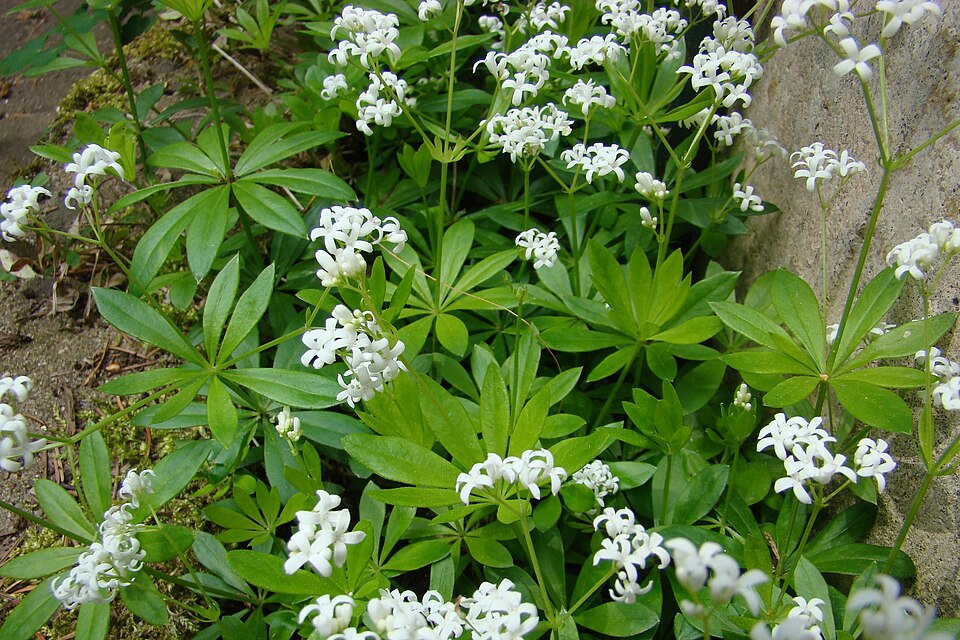
Photo: Wikimedia Commons
Sweet woodruff turns the problem spots of the garden into assets. The dry shade under trees, the damp north side of the house, the strip along the fence where nothing thrives: woodruff carpets them all with whorled green leaves and spring flowers. The dried leaves carry a sweet-hay fragrance found in no other herb, flavoring teas and scenting drawers for a year. It spreads steadily, so edge it, and otherwise leave it alone.
Sweet woodruff solves the dry-shade problem and the damp-shade problem at once. This low perennial spreads into a carpet of whorled leaves under trees and on the shady side of the house, places where grass gives up and most perennials sulk. In spring it covers itself with tiny white flowers, and the dried leaves carry a sweet-hay fragrance from coumarin that flavors teas and scents sachets for a year. Learning how to grow sweet woodruff gives you a groundcover that works for its keep.
The plant is Galium odoratum, hardy in zones 4 through 8. The USDA PLANTS Database documents it as naturalized in North American woodlands. It spreads by underground runners, so give it room or edge the bed.
Getting Started
When it comes to how to grow sweet woodruff, getting the details right makes all the difference.

Many homeowners find that how to grow sweet woodruff is easier than they expected once they know the basics.
Plant divisions or rooted runners rather than seed if you can. Divisions establish fast and skip the fussy germination. Set them 6 to 8 inches apart in moist, humus-rich soil under trees or on the shady side of the house. Water well and mulch with shredded leaves.
Seeds need cold stratification, so fall sowing outdoors gives the best germination. Sow in fall where the seed experiences winter naturally, and seedlings emerge in spring. Indoor sowing requires weeks of chilling in the refrigerator first. For most gardeners, a flat of nursery plants or a neighbor's divisions beats seed. The Lady Bird Johnson Wildflower Center woodland-plant notes confirm the shade and moisture preferences.
When and How to Plant
Many homeowners find that how to grow sweet woodruff is easier than they expected once they know the basics.
The key to how to grow sweet woodruff is choosing the right approach for your space and budget.
Set out divisions in spring after the soil can be worked, or in early fall so roots establish before winter. Both timings work. Spring planting gives the longest first season; fall planting lets roots settle in cool, moist soil.
Sow seed outdoors in fall, about eight weeks before your first fall frost, pressing it onto the soil surface. Winter does the chilling work. Seedlings appear in spring. Check frost timing on the Old Farmer's Almanac planting calendar or your USDA zone planting dates.
Edge the bed if you want containment. The runners spread steadily, and a bed without edging slowly colonizes its neighbors. Plastic or metal edging sunk six inches deep holds the line.
Soil and Sun
The key to how to grow sweet woodruff is choosing the right approach for your space and budget.
With a little planning, how to grow sweet woodruff can fit even a busy schedule.
Partial to full shade. Sweet woodruff thrives where most herbs fail: under trees, on the north side of buildings, in the shadow of fences. Morning sun with afternoon shade is ideal, but full shade works too. It sulks in hot sun and dry soil.
Soil should be rich, moist, and well-drained. Work compost or leaf mold into the bed before planting. Woodruff loves the leafy, humus-rich soil of a woodland floor; mimic that and it thrives. It sulks in dry shade, so water until established and mulch yearly. The Missouri Botanical Garden groundcover notes describe the same woodland-soil recipe.
Shade companions include chamomile at the bed's sunny edge and mint in its own contained corner nearby.
Watering and Feeding
With a little planning, how to grow sweet woodruff can fit even a busy schedule.
Before you start, it helps to understand how how to grow sweet woodruff works in real homes.
Keep the soil consistently moist. Woodruff sulks in dry shade more than in shade itself; moisture is the limiting factor. Mulch with shredded leaves each fall, which feeds the soil and holds water the way a forest floor does.
Feed with organic matter, not chemicals. Top-dress with leaf mold or compost each year instead of synthetic fertilizer. The slow, steady nutrition of decaying leaves suits woodland plants best. If the bed is under trees that drink heavily, water more often; tree roots outcompete everything. Clemson Cooperative Extension shade-garden notes cover watering under trees.
Care Through the Season
Before you start, it helps to understand how how to grow sweet woodruff works in real homes.
A good plan for how to grow sweet woodruff saves time, money, and frustration.
Weeding is the main chore until the carpet closes. Pull weeds while they are small; once woodruff knits together, it suppresses most weeds itself. Mulch with shredded leaves to help it along.
Cut back ragged patches after flowering to keep the mat tidy. Shearing the bed lightly rejuvenates it. Remove dead leaves in spring to reduce slug habitat. Trap slugs if they chew the new growth; damp shade is slug country. The Clemson Home & Garden Information Center has practical slug notes for shade gardens.
Pull runners that cross the edging. The bed will try to escape; a yearly edging check keeps it in bounds. Divide crowded clumps every few years to renew vigor and supply new plantings.
Harvest
A good plan for how to grow sweet woodruff saves time, money, and frustration.
For most people, how to grow sweet woodruff comes down to a few smart choices.
Harvest the leafy stems just as the tiny white flowers open, when the coumarin scent is strongest. Cut stems with scissors, leaving enough foliage for the bed to recover. A well-established bed gives generously without harm.
Dry quickly in a dark, airy spot. Spread stems in a single layer on screens; the famous sweet-hay fragrance develops as they dry. Darkness preserves the scent. When crisp, strip the leaves from the stems and store in sealed jars. Dried woodruff keeps its scent for a year.
Use for herbal teas, traditional herbal wine, and potpourri. The flavor is sweet and vanilla-like, unlike any other herb. A small jar of dried woodruff scents a room for months.
Sweet Woodruff Through the Seasons
For most people, how to grow sweet woodruff comes down to a few smart choices.
If you are new to how to grow sweet woodruff, start with the simplest option and build from there.
Spring is planting and dividing time. Set out divisions as soon as the soil can be worked, spacing six to eight inches apart in humus-rich soil. Water well and mulch with shredded leaves. Established beds get a top-dressing of leaf mold and a shearing of ragged patches after flowering. Pull weeds while they are small; the closing carpet handles the rest.
Summer needs moisture above all. Woodruff sulks in dry shade more than in shade itself. Water deeply in dry spells and keep the leaf mulch topped up. Trap slugs, which love the damp shade. Cut back any scorched or ragged areas to keep the mat tidy.
Fall is for harvesting the last cuttings and mulching. Cut stems for drying before hard frosts, then mulch the bed with shredded leaves, mimicking the forest floor. The foliage dies back with freezing weather.
Winter needs nothing. The roots rest under mulch in zones 4 through 8. In spring the whorled leaves emerge, followed by the tiny white flowers, and the cycle begins again.
Using Sweet Woodruff
If you are new to how to grow sweet woodruff, start with the simplest option and build from there.
When it comes to how to grow sweet woodruff, getting the details right makes all the difference.
Dry the leafy stems quickly in a dark, airy place; the famous sweet-hay fragrance develops as they dry. Use the dried herb for teas, where the vanilla-like flavor is unlike any other, and for traditional herbal wine. Pack dried leaves into sachets for drawers and closets; the scent lasts a year sealed. A jar of dried woodruff is one of the herb garden's finest products.
Troubleshooting
When it comes to how to grow sweet woodruff, getting the details right makes all the difference.
Thin, patchy growth usually means too dry or too shady combined with hungry tree roots. Water more, mulch deeper, and top-dress with compost. Scorched leaves mean too much sun; move divisions to deeper shade.
Poor germination from seed almost always means the chilling requirement was skipped. Sow outdoors in fall and let winter do the work. Rampant spreading means the edging failed; reinstall it deeper and pull escapees.
Woodruff is hardy and pest-free in its preferred zones 4 through 8. Outside that range it struggles: too hot in the deep South, too cold in the far North without snow cover. The USDA National Agricultural Library indexes woodland-herb research, and Gardenia.net groundcover guides note the spreading habit honestly.
Thin, patchy beds usually mean too dry or too shady combined with thirsty tree roots. Water more, mulch deeper, and top-dress with compost. Woodruff under maples struggles most; the tree roots drink everything.
If the bed escapes its bounds, the edging failed. Reinstall edging six inches deep and pull the escapees. A yearly edging check in spring prevents most wandering.
Poor germination from seed means the chilling requirement was skipped. Sow outdoors in fall and let winter do the work. Divisions remain the faster, surer method.
For the best fragrance, harvest on a dry morning after the dew lifts. Wet leaves dry slowly and can mold; dry leaves cure fast and keep their scent. Spread stems thinly on screens rather than bunching them, which traps moisture. The extra care shows in the finished jar.
A woodruff bed under a flowering tree is one of the garden's quiet pleasures in spring: white blossoms above, white blossoms below. Site new beds where you walk daily, so the planting gets noticed and the spreading gets checked.
Check the bed each spring for tree seedlings; woodland beds collect them, and a maple seedling left two years becomes a real job. Pull intruders while small and the woodruff carpet stays clean with little effort.
References
Clemson University Cooperative Extension. (n.d.). Home & Garden Information Center. https://hgic.clemson.edu/
Lady Bird Johnson Wildflower Center. (n.d.). Native plants database. https://www.wildflower.org/plants/
Missouri Botanical Garden. (n.d.). Plant finder. https://www.missouribotanicalgarden.org/
U.S. Department of Agriculture. (n.d.). PLANTS database. https://plants.usda.gov/home
Was this guide helpful?

About My Garden US
The My Garden US editorial team writes practical, in-depth home and garden guides for American homeowners — tested advice, no fluff.