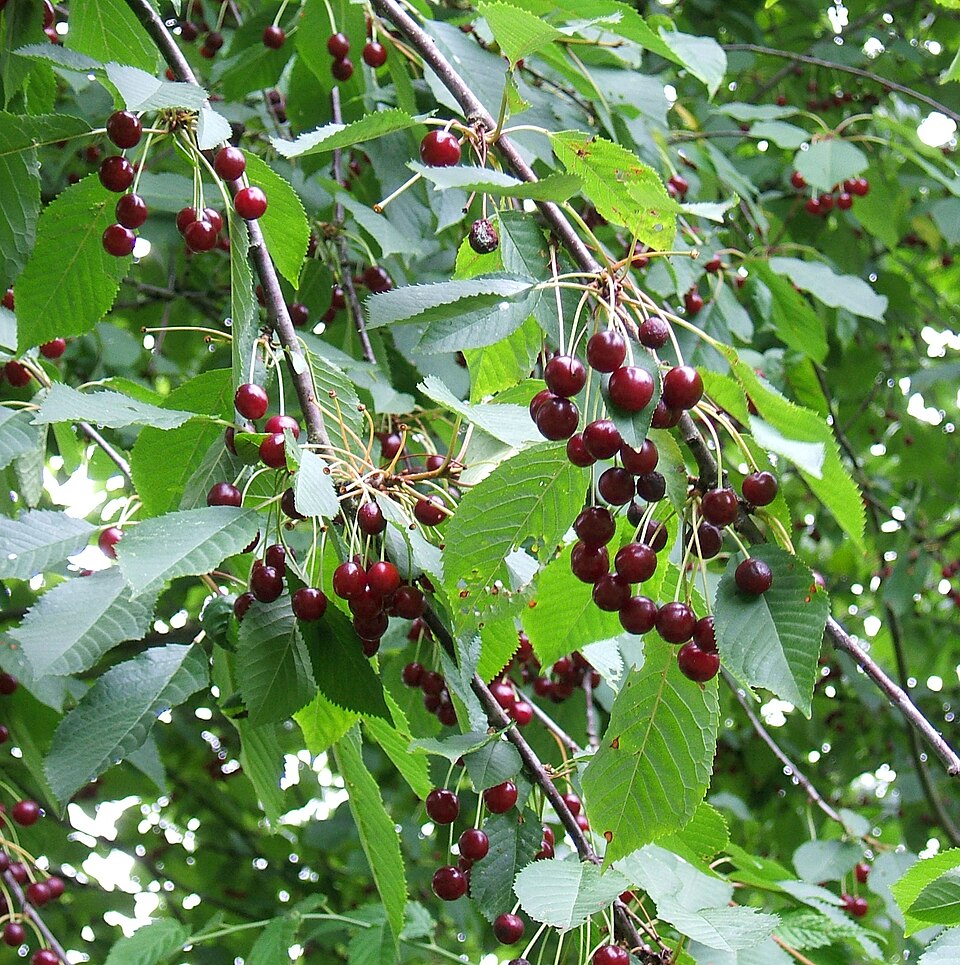
A sweet cherry picked warm off your own tree is a different fruit from anything in a store bag. It is darker, sweeter, and impossibly juicy, and it lasts about ten seconds between picking and eating. Sweet cherries are the luxury fruit of the home orchard, and they are more growable than their reputation suggests.
Table of Contents
Table of Contents
This guide explains how to grow sweet cherries in backyards across the cooler parts of the country. They need zones 5 through 7, full sun, and well-drained soil, plus one critical partner: most varieties need a second, different sweet cherry nearby for pollination. The big jobs are choosing compatible varieties, netting against birds, and pruning in dry weather. Expect to wait four to seven years for fruit, but a healthy tree then produces for decades. elderberries and serviceberries fruit sooner if you want berries while the cherry matures.

Photo: Wikimedia Commons
Choosing a Variety
When it comes to how to grow sweet cherries, getting the details right makes all the difference.

Many homeowners find that how to grow sweet cherries is easier than they expected once they know the basics.
Most sweet cherries need cross-pollination, so plan on two compatible varieties. Classic pairings include Bing with Rainier or Stella, and the variety Stella is unusual in being self-fertile, which makes it the top pick for gardeners with room for only one tree. Lapins is another self-fertile option with large, dark fruit.
Buy grafted trees on dwarfing or semi-dwarf rootstock. A dwarf tree stays eight to twelve feet tall, which means you can actually net it and pick it without a tall ladder. Standard trees reach twenty-five feet and turn harvest into an expedition. Gisela rootstocks are the modern dwarfing standard and perform well in home orchards. The USDA PLANTS Database lists Prunus avium with its cultivated forms and range.
If your yard only fits one tree, make it a self-fertile variety like Stella or Lapins. You sacrifice the cross-pollination boost, but a self-fertile tree alone still crops well, while a self-sterile variety alone crops not at all. For small yards this is the single most important decision. The Missouri Botanical Garden fruit pages list self-fertile cherry varieties.
When and How to Plant
Many homeowners find that how to grow sweet cherries is easier than they expected once they know the basics.
The key to how to grow sweet cherries is choosing the right approach for your space and budget.
Plant grafted sweet cherries in early spring as soon as the ground can be worked. Space dwarf trees eight to twelve feet apart and semi-dwarfs fifteen to twenty feet apart. Dig a hole twice as wide as the roots but no deeper, set the graft union two inches above the soil line, and water deeply. Never bury the graft union, or the scion roots and you lose the dwarfing effect.
Choose the sunniest, best-drained spot in the yard. Cherries hate wet feet, and a low spot that collects water will kill a young tree. Good air drainage matters too, since cold air pooling in frost pockets damages the early blossoms. check your USDA zone planting dates to time spring planting for your area. If you plant two varieties for pollination, put them within fifty feet of each other so bees work both. The Old Farmer's Almanac fruit-tree pages cover spring planting basics.
On dwarfing rootstock, plant the tree with the graft union a full three inches above the soil, since dwarfing rootstocks can root from the scion if buried, undoing the size control. After planting, water with a slow trickle for an hour so moisture reaches the full root zone. The Gardenia.net tree-planting guides illustrate proper graft-union height.
Soil and Sun
The key to how to grow sweet cherries is choosing the right approach for your space and budget.
With a little planning, how to grow sweet cherries can fit even a busy schedule.
Sweet cherries demand full sun and well-drained loam. Eight hours of direct sun is the minimum for good fruit set and sweetness. The soil must drain freely; cherries in soggy ground develop root rot and rarely survive more than a few years. A gentle slope is ideal, giving both sun exposure and air drainage.
Test the soil before planting and amend as needed. Cherries prefer a near-neutral pH and do poorly in very acidic ground. Work compost into the planting area, but skip heavy manure in the hole, which can burn young roots. Mulch young trees with wood chips, keeping the mulch away from the trunk. The University of Minnesota Extension warns that poor drainage is the leading killer of young cherry trees.
Watering and Feeding
With a little planning, how to grow sweet cherries can fit even a busy schedule.
Before you start, it helps to understand how how to grow sweet cherries works in real homes.
Water deeply at planting and through the first season while roots establish. After that, sweet cherries need only moderate water. A deep soaking during dry spells, especially as fruit swells, keeps the crop sizing up. Stop pushing water late in the season so the tree hardens off properly for winter.
Avoid wetting the fruit near harvest. Rain close to picking causes the cherries to crack, and overhead watering does the same. Drip irrigation or a soaker hose at the base is the right approach. Feed young trees lightly in spring with a balanced fertilizer; mature trees in decent soil often need little beyond compost. Too much nitrogen makes soft growth that invites disease. The Clemson HGIC fruit pages stress watering at the root zone for all stone fruits.
Care Through the Season
Before you start, it helps to understand how how to grow sweet cherries works in real homes.
A good plan for how to grow sweet cherries saves time, money, and frustration.
Prune sweet cherries only in dry weather, ideally in late summer after harvest. Pruning in wet conditions invites silver leaf disease, a fungal infection that enters through fresh cuts. Train young trees to an open center with three or four main limbs, which lets light and air into the canopy.
The critical job is bird control. Drape netting over the tree before the fruit starts to color, not after you spot damage. Birds watch cherries ripen and strip a tree in a day. Secure the netting at the trunk so birds cannot slip underneath. Watch for brown rot on ripening fruit in wet weather, cherry fruit fly maggots, and bacterial canker oozing on limbs. aronia berries nearby share some of the same pests, so monitor the whole fruit patch together. The Clemson Cooperative Extension has detailed spray and sanitation schedules for home orchards.
Each winter, walk around the tree with pruners and remove any dead, broken, or crossing limbs, plus water sprouts shooting straight up. This light annual maintenance keeps the open center open and takes only minutes on a dwarf tree. Paint young trunks white in fall to prevent winter sunscald on the southwest side. The UF IFAS Gardening Solutions home orchard pages describe winter tree care.
Harvest
A good plan for how to grow sweet cherries saves time, money, and frustration.
For most people, how to grow sweet cherries comes down to a few smart choices.
Expect fruit four to seven years after planting; dwarf trees usually beat standards by a year or two. Pick cherries when they are fully colored, sweet, and glossy. Taste is the real test, since color alone can mislead on some varieties. Cherries do not ripen after picking, so leave them on the tree until they are truly ready.
Pick with the stems on, which keeps the fruit fresher in storage. Harvest in the cool of the morning and refrigerate promptly; fresh cherries keep about a week chilled. Freeze surplus on trays for pies and sauces later. A mature dwarf tree can yield twenty-five pounds or more in a good year. The USDA National Agricultural Library hosts harvest and storage references for stone fruits.
Troubleshooting
For most people, how to grow sweet cherries comes down to a few smart choices.
If you are new to how to grow sweet cherries, start with the simplest option and build from there.
No fruit on a healthy-looking tree usually means a pollination problem. Confirm your varieties are compatible and bloom together, and that a second tree is close enough for bees. A late frost on open blossoms also wipes out the crop; there is no fix except siting the next tree on higher ground.
Cracked fruit after rain is the classic sweet cherry heartbreak. Choose crack-resistant varieties like Lapins if your springs are wet, and keep overhead water off the fruit. Bacterial canker shows as oozing, sunken bark; prune out affected limbs well below the damage in dry weather and disinfect tools between cuts. Brown rot turns ripening fruit to mush; pick up fallen fruit and thin the canopy for air flow.
If the tree simply will not thrive, suspect drainage. Cherries decline fast in wet soil, and no amount of feeding fixes roots sitting in water. In warm-winter regions past zone 7, the tree may leaf out but never fruit for lack of chill hours; sweet cherries need long, cold winters and there is no workaround.
Beating the Birds: Netting That Works
If you are new to how to grow sweet cherries, start with the simplest option and build from there.
When it comes to how to grow sweet cherries, getting the details right makes all the difference.
Birds are the number one reason home cherry crops fail, and netting is the only reliable answer. Drape the net over the tree as soon as the fruit starts to blush, not after you notice damage; birds watch ripening fruit and can strip a tree in a single morning. Use netting with a mesh small enough to exclude birds but large enough not to tangle them badly, and gather it snugly around the trunk so birds cannot slip underneath.
For dwarf trees, a frame of PVC pipe or bamboo poles holds the net off the fruit; netting laid directly on the branches still works but lets birds peck through it. Remove the net promptly after harvest and store it dry for next year. Scare devices like reflective tape help for a day or two, but birds habituate fast; only netting truly protects the crop. The Old Farmer's Almanac planting calendar reminds growers to have nets ready before the fruit colors, since the window between blush and harvest is short.
Sweet cherries ask for patience and netting, and they repay both many times over. Two compatible varieties on dwarfing rootstock, a sunny well-drained site, dry-weather pruning, and netting before the fruit colors: follow that recipe and you will be picking dark, sweet cherries that no store can match. The wait is long, but the first bowl of homegrown cherries makes it worthwhile.
References
When it comes to how to grow sweet cherries, getting the details right makes all the difference.
Many homeowners find that how to grow sweet cherries is easier than they expected once they know the basics.
University of Minnesota Extension. (n.d.). Growing stone fruits in home gardens. https://extension.umn.edu/
Clemson Cooperative Extension. (n.d.). HGIC: Cherries. https://hgic.clemson.edu/
USDA National Agricultural Library. (n.d.). Fruit harvest and storage. https://www.nal.usda.gov/
Old Farmer's Almanac. (n.d.). Growing cherries: planting guide. https://www.almanac.com/
Many homeowners find that how to grow sweet cherries is easier than they expected once they know the basics.
Was this guide helpful?

About My Garden US
The My Garden US editorial team writes practical, in-depth home and garden guides for American homeowners — tested advice, no fluff.