The medlar is the strangest fruit you can grow - and one of the oldest cultivated fruits in the world, eaten by the Romans and beloved in medieval England. The fruit is harvested hard as a rock, stored until it rots to a soft brown pulp, and only then eaten. That controlled rotting has a name, "bletting," and it transforms the astringent fruit into something tasting like spiced applesauce. If you want to learn how to grow medlar, know that the tree itself is easy - the technique is all in the waiting.
Table of Contents
Table of Contents
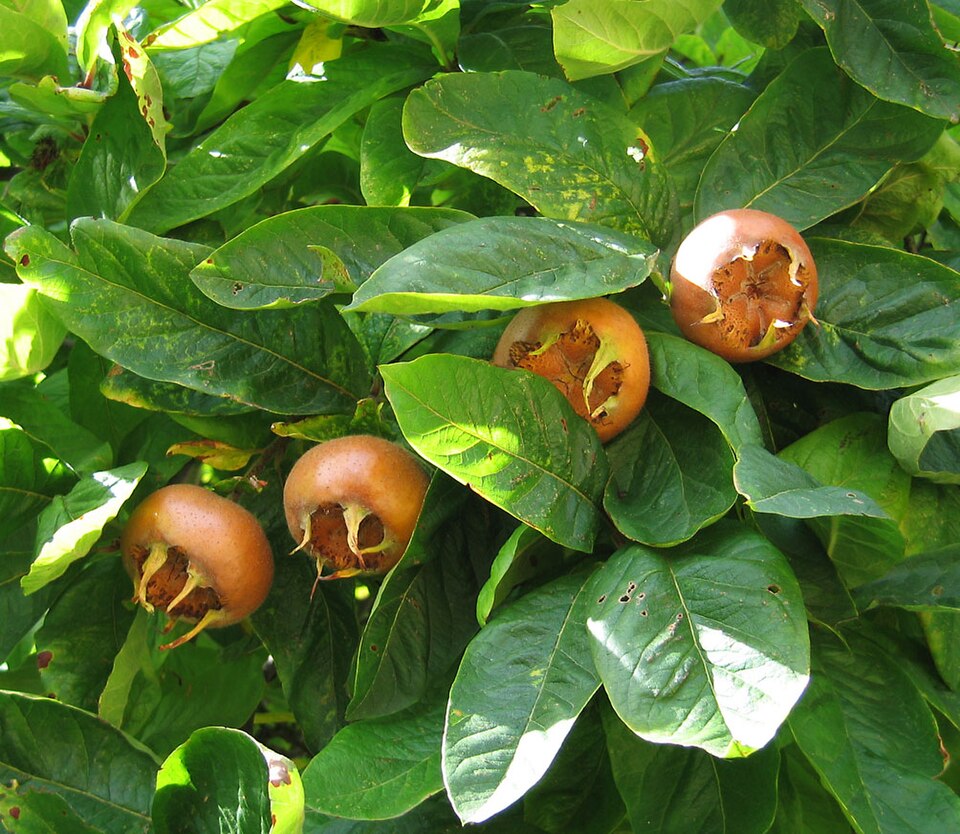
Medlar (Mespilus germanica) is hardy in zones 5 through 8. It needs winter chill to fruit well and is generally a tough, undemanding small tree. Do not expect fruit for three to five years after planting - but the tree is ornamental enough to earn its keep while you wait, with big white spring blossoms and picturesque form.

Photo: Wikimedia Commons
Choosing a Tree
When it comes to how to grow medlar, getting the details right makes all the difference.

Many homeowners find that how to grow medlar is easier than they expected once they know the basics.
Buy a grafted tree - medlars are grafted onto quince or hawthorn rootstock, which controls size and brings earlier fruiting. Named varieties differ in fruit size; the large-fruited types are easier to eat and more impressive, while smaller types can be more flavorful. Ask the nursery which varieties fruit reliably in your region. Gardenia.net has variety notes for the curious.
Medlars are self-fertile, so one tree fruits alone. The tree stays small - typically 10 to 15 feet - with a picturesque, spreading habit and large, dramatic blossoms in spring that look like wild roses. It is genuinely ornamental; plant it where you will see the spring show. The Missouri Botanical Garden plant finder covers its landscape uses.
Order bare-root trees for spring planting, while dormant. A one- or two-year-old tree establishes fastest.
When and How to Plant
Many homeowners find that how to grow medlar is easier than they expected once they know the basics.
The key to how to grow medlar is choosing the right approach for your space and budget.
Plant bare-root trees in spring, as soon as the ground can be worked - roughly around your last spring frost date. Check your zone's timing on our planting calendar. Dormant spring planting gives roots the whole season to establish.
Dig a hole wide enough to spread the roots, set the tree at the same depth it grew in the nursery (find the old soil line on the trunk), and backfill with native soil mixed with a little compost. Water deeply and mulch with three to four inches of wood chips, keeping mulch back from the trunk. Stake the young tree for the first year; medlar wood is sturdy but young trees still rock in wind.
Space trees about 15 feet apart. Medlar tolerates a wide range of soils - it is not fussy - but fruits best in moist, well-drained loam. Full sun to partial shade; full sun gives heavier crops. A sheltered spot protects the big spring blossoms from wind damage. If you are planting near a patio or path, remember the ripe fruit drops - site it where falling medlars will not be a nuisance underfoot.
Soil and Sun
The key to how to grow medlar is choosing the right approach for your space and budget.
With a little planning, how to grow medlar can fit even a busy schedule.
Full sun to partial shade, with full sun preferred for the best fruiting. Medlar needs winter chill to fruit well, so it suits zones 5 through 8 and struggles where winters are too mild. The blossoms are reasonably frost-hardy for a fruit tree, but a site with good air drainage still helps - avoid frost pockets.
Soil: moist, well-drained loam is ideal, but medlar adapts to clay and sand as long as drainage is reasonable. Work compost into the planting hole and mulch yearly. It is not a heavy feeder; the mulch and compost cycle covers its needs. A near-neutral pH suits it. If your soil is very poor, a little extra compost at planting helps the young tree establish. For soil guidance, Clemson Cooperative Extension and University of Minnesota Extension both publish practical home-soil advice.
Watering and Feeding
With a little planning, how to grow medlar can fit even a busy schedule.
Before you start, it helps to understand how how to grow medlar works in real homes.
Water deeply at planting and keep the young tree evenly moist through its first two seasons - about an inch a week when rain falls short.
Young trees need watching in their first summer. The graft union is the vulnerable point - keep mulch and soil from burying it, and rub off any shoots sprouting from below it promptly. A young medlar puts energy into roots first, so do not worry if top growth seems slow in year one. By year two, with steady water and a yearly compost mulch, the framework branches develop and the tree starts looking like the picturesque specimen it will become. Patience in these early years pays off in a stronger, longer-lived tree. Mature medlars are reasonably drought-tolerant but fruit better with steady moisture during fruit development. Mulch with wood chips or compost to hold moisture and suppress weeds.
Feed lightly in spring with compost or a balanced fertilizer. Medlar is not a heavy feeder - one spring feeding is plenty. Too much nitrogen pushes leafy growth at the expense of fruit. A yearly compost mulch is the gentlest feeding program and suits this undemanding tree perfectly. The Clemson HGIC fruit tree pages and the Old Farmer's Almanac orchard guides cover modest feeding for uncommon fruits.
Pruning: Less Is More
Before you start, it helps to understand how how to grow medlar works in real homes.
A good plan for how to grow medlar saves time, money, and frustration.
Medlars need very little pruning - one of their virtues. Each winter, remove dead, damaged, or crossing branches and open the center slightly for light and air. That is the whole program. The tree naturally forms an attractive spreading shape without much help.
Remove root suckers, especially from hawthorn rootstock, which suckers enthusiastically - suckers from below the graft are not your fruiting variety. Keep pruning tools clean and sharp. Medlars are generally healthy, though fire blight can strike in bad years: if you see blackened shoot tips, cut well below the damage and disinfect tools between cuts, and do not compost the diseased wood. UF IFAS Gardening Solutions has fire blight identification photos.
Medlar fits the old-fashioned home orchard alongside quince and American persimmons - all fruits that demand patience and reward it richly.
Harvest and Bletting: The Whole Technique
A good plan for how to grow medlar saves time, money, and frustration.
For most people, how to grow medlar comes down to a few smart choices.
Do not expect fruit for three to five years - medlar tests patience before it tests taste. When fruit finally comes, harvest the hard fruits after the first frosts of fall. The fruit must be hard at picking; soft fruit on the tree has usually spoiled rather than bletted properly.
Store the hard fruits stem-down in a single layer in a cool, airy place - a garage shelf or unheated room works. Over several weeks, they blet: the flesh turns brown and soft, like a baked apple, and the astringency disappears. Check them regularly; each fruit blets on its own schedule. Eat only once fully soft - firm medlars are astringent and inedible, while properly bletted ones taste like spiced applesauce with a hint of wine.
Eat bletted medlars with a spoon, scooping the pulp from the skin. They are traditionally served with cheese or port, and they cook into jellies and preserves. The flavor is unlike any other fruit - an acquired taste that becomes a devotion.
Judging ripeness for bletting is a skill you learn by touch. A bletted medlar yields gently all over like a ripe persimmon, and the skin turns from russet-brown to a deeper, almost mahogany brown. Under-bletted fruit still puckers; over-bletted fruit ferments. Check your stored fruit every few days and eat each one at its peak - they do not all ripen at once, which stretches the strange pleasure over weeks. The large central seeds are easily avoided with a spoon; the pulp around them is the prize.
The spring blossoms are worth mentioning again - huge, white, rose-like flowers that make the medlar one of the prettiest fruit trees in bloom. Even in years when fruit is still a dream away, the tree earns its place as an ornamental, and the twisted branches give winter interest too.
Troubleshooting
For most people, how to grow medlar comes down to a few smart choices.
If you are new to how to grow medlar, start with the simplest option and build from there.
No fruit for years: Normal. Allow three to five years; some trees take longer. Make sure the tree gets enough chill hours in winter.
Fruit never softens: It may need more time, or the storage spot is too warm and dry. Cool, humid air blets best. Be patient - bletting takes weeks.
Eating hard fruit: Do not. Firm medlars are astringent and unpleasant. Wait for full softness.
Fire blight: Cut well below blackened shoots, disinfect tools, avoid excess nitrogen.
Suckers from rootstock: Remove promptly; they are not the fruiting variety and will overwhelm the graft if left.
Birds or squirrels taking fruit: Harvest promptly after frosts; netting helps for valuable crops. The USDA PLANTS Database documents the species, and the USDA National Agricultural Library indexes medlar references.
Leaf spot or minor leaf diseases: Unsightly but rarely serious on this tough tree. Rake up and destroy fallen leaves in autumn to reduce next year's inoculum, and keep the center open for airflow.
Slow growth: Medlar is never fast. As long as leaves are healthy green and the tree leafs out fully each spring, it is on track - this is simply a slow-maturing species.
References
If you are new to how to grow medlar, start with the simplest option and build from there.
When it comes to how to grow medlar, getting the details right makes all the difference.
Missouri Botanical Garden. (n.d.). Mespilus germanica. https://www.missouribotanicalgarden.org/
Clemson University Cooperative Extension Service. (n.d.). Uncommon fruits for the home garden. https://hgic.clemson.edu/
Old Farmer's Almanac. (n.d.). Growing medlar. https://www.almanac.com/
Many homeowners find that how to grow medlar is easier than they expected once they know the basics.
When it comes to how to grow medlar, getting the details right makes all the difference.
Was this guide helpful?

About My Garden US
The My Garden US editorial team writes practical, in-depth home and garden guides for American homeowners — tested advice, no fluff.