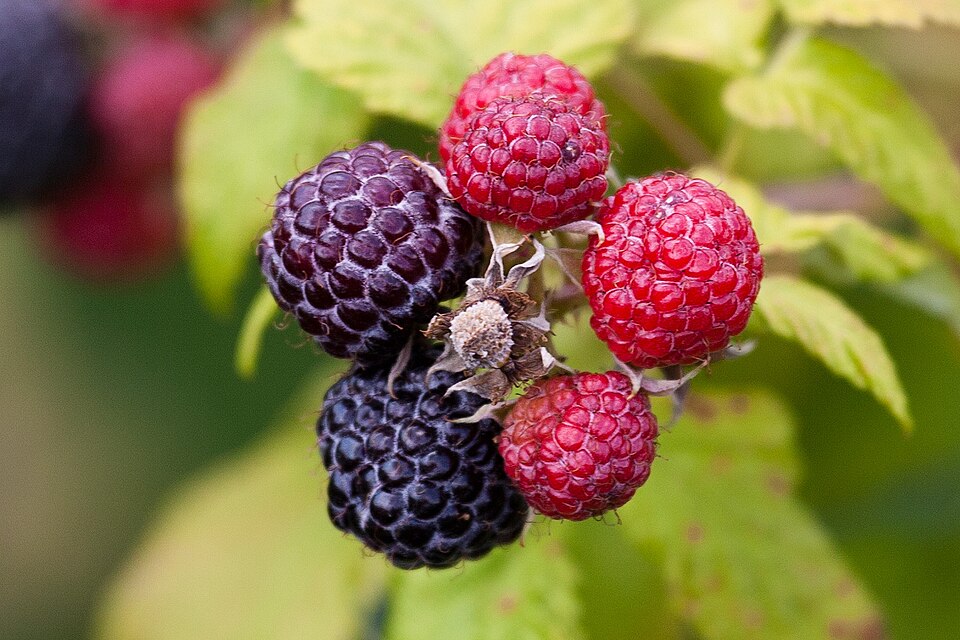
The loganberry is one of the great old American berries - a blackberry-raspberry cross with big, deep red-purple fruit and a bright, tart flavor that shines in jam, pies, and sauces. It is not a plant you can ignore, though. Loganberries trail long, thorny canes (unless you choose a thornless type), and they demand a trellis and a yearly haircut. If you are ready to learn how to grow loganberries, this guide covers planting, training canes, pruning, and harvest from the first dormant cane to the first bowl of jam.
Table of Contents
Table of Contents
Loganberry (Rubus × loganobaccus) is hardy in zones 5 through 9. Canes winter-kill below zone 5, and the extreme heat of low-desert summers is too much for it, so it suits most of the country outside the far north and the deep desert Southwest. The plants are vigorous - one healthy planting can produce for a decade or more with yearly care.

Photo: Wikimedia Commons
Choosing Plants
When it comes to how to grow loganberries, getting the details right makes all the difference.

Many homeowners find that how to grow loganberries is easier than they expected once they know the basics.
Buy dormant bare-root canes from a reputable nursery, and think hard about thorns. The original loganberry is viciously thorny - picking without heavy gloves is a punishment, and pruning season feels like a wrestling match. Thornless varieties fruit just as heavily with none of the bloodshed, so there is little reason to suffer the thorns. When you shop, compare variety notes on Gardenia.net and your state extension service's bramble recommendations. The USDA PLANTS Database also carries the botanical background on this blackberry-raspberry hybrid, which was developed on the West Coast well over a century ago and has been a home-garden favorite ever since.
Loganberries are self-fertile, so one plant fruits alone, but give the planting room: space canes 6 to 8 feet apart. The canes trail 10 feet or more in a season, so plan the trellis before you plant. A simple two- or three-wire trellis on sturdy posts works well - set posts deep, because a mature planting loaded with fruit is heavy. Clemson Cooperative Extension publishes clear bramble trellis plans for home growers.
When and How to Plant
Many homeowners find that how to grow loganberries is easier than they expected once they know the basics.
The key to how to grow loganberries is choosing the right approach for your space and budget.
Plant dormant canes in spring, about a week after your last spring frost. Early planting gives roots time to establish before the growing season kicks in. Check the planting calendar for your USDA zone dates to time it right.
Dig a hole wide enough to spread the roots, set the crown at soil level - no deeper - and backfill with soil mixed with compost. Water deeply right away and mulch with three to four inches of straw or wood chips to hold moisture and keep weeds down. Cut the planted cane back to about 6 inches to force strong new growth from the base; it looks drastic, but it builds a stronger plant.
If your soil is heavy or wet, plant on a slight ridge or mound so the crown stays out of standing water. Loganberries tolerate a range of soils but do best in rich, well-drained ground with plenty of organic matter.
Soil and Sun
The key to how to grow loganberries is choosing the right approach for your space and budget.
With a little planning, how to grow loganberries can fit even a busy schedule.
Full sun gives the heaviest crops and the sweetest berries - aim for at least six to eight hours of direct light. In the hottest parts of zone 9, a little afternoon shade helps fruit from cooking on the cane.
Soil should be rich and well-drained, with a slightly acidic to neutral pH. Work compost or rotted manure into the planting row before the canes go in, and keep a yearly mulch of organic matter. Good drainage is critical: bramble roots sitting in wet soil invite root rot and crown diseases. If you are unsure about your soil, a test through your local extension office takes the guesswork out - the University of Minnesota Extension soil testing pages explain the process step by step.
Watering and Feeding
With a little planning, how to grow loganberries can fit even a busy schedule.
Before you start, it helps to understand how how to grow loganberries works in real homes.
Water deeply through the fruiting season - about an inch to an inch and a half a week when rain falls short. Berries size up and sweeten on steady moisture; drought gives small, seedy fruit. Drip irrigation or a soaker hose at the base of the row keeps water on the roots and off the leaves, which helps hold down leaf diseases.
Feed in early spring with a balanced fertilizer or a rich compost top-dressing. Brambles are moderate feeders - one good spring feeding is usually enough. Avoid piling fresh manure against the canes, which can burn them. The Old Farmer's Almanac garden guides give simple fertilizer timing advice for home fruit plantings.
Training and Pruning Canes
Before you start, it helps to understand how how to grow loganberries works in real homes.
A good plan for how to grow loganberries saves time, money, and frustration.
This is the heart of loganberry care. Loganberries fruit on second-year canes (floricanes). In spring, last year's new canes - the primocanes - grow long and leafy; the following year they flower, fruit, and die. Your yearly job is to cut out the dead fruited canes and train the replacements.
After harvest, cut every cane that bore fruit right down to the ground and remove it from the row. Then take this season's new canes and tie them loosely along the trellis wires, spacing them a few inches apart for airflow. Tip vigorous new shoots when they reach the top wire to encourage side branches, which is where much of the fruit forms. Wear thick gloves - even "thornless" types can have prickles.
Good airflow through the trellis matters. Crowded canes stay wet and invite cane diseases. Thin the new canes to the strongest 6 to 8 per plant and remove the rest at ground level. The Clemson HGIC bramble pruning guides show the floricane cycle with clear diagrams.
Weed control under the trellis deserves attention too. Grass creeping into the row steals water and gives pests a hiding place. A deep organic mulch suppresses most weeds; pull the rest by hand rather than hoeing deep, since bramble roots run shallow and hoe damage opens the door to disease. Keep the mulch a few inches back from the crown itself so the base stays dry.
In late winter, before buds swell, walk the row and finish any pruning you skipped after harvest. Cut out weak, spindly canes and any showing canker or damage, leaving only thick, healthy canes to tie up. This dormant-season cleanup is also the time to repair trellis wires and tighten posts before the weight of the new season arrives.
Loganberry pairs naturally with other brambles in the home fruit patch. If you grow raspberries or blackberries, the same trellis know-how applies, and harvest seasons often overlap nicely.
Harvest
A good plan for how to grow loganberries saves time, money, and frustration.
For most people, how to grow loganberries comes down to a few smart choices.
Harvest when berries are deep red-purple, soft to the touch, and fully flavored - taste is the true test. Loganberries stay tarter than boysenberries, which is exactly what makes them superb cooked. Pick every couple of days at peak season; ripe berries left on the cane soften and spoil fast, and they attract fruit flies.
Use shallow containers - deep buckets crush the bottom layers. Loganberries are fragile, so plan to use or freeze them the same day you pick. For jam, the high acid and pectin set beautifully. For pies and sauces, their bright flavor needs little help. Freeze extras on trays in a single layer, then bag them for winter.
Net the planting against birds as fruit colors up. Birds can strip a row in days, and netting draped over the trellis is the only reliable defense. Check nets daily so no bird gets tangled. Pick in the cool of the morning when berries are firmest, and get them into shade or refrigeration quickly - loganberries soften fast in heat.
For the biggest harvests, keep notes year to year. Which canes fruited heaviest? Did the row get enough water during the dry spell? A small notebook turns guesswork into a system, and after two or three seasons you will know exactly what your planting wants. The Old Farmer's Almanac planting calendar helps you line up spring feeding and pruning with your local season.
Troubleshooting
For most people, how to grow loganberries comes down to a few smart choices.
If you are new to how to grow loganberries, start with the simplest option and build from there.
Winter-killed canes: Below zone 5, canes die back or the plant fails outright. In borderline zones, lay canes on the ground and cover them with straw for winter.
Cane borers: Wilting shoot tips with a swollen ring near the base signal borers. Cut the affected cane below the swelling and destroy it - do not compost it.
Grubs in the fruit (raspberry beetle): Small white grubs inside berries. Pick fruit promptly when ripe and clean up fallen fruit; the beetles overwinter in soil debris.
Poor fruit set: Late spring frosts can kill flowers. In frost-prone spots, site the planting where cold air drains away, not in a low pocket.
Birds stealing the crop: Net as soon as berries start coloring. There is no scare tactic that works for long.
Mildew or leaf spot: Improve airflow by thinning canes, water at the base, and remove fallen leaves from the row in fall. The USDA National Agricultural Library indexes extension fact sheets on bramble diseases, and the USDA PLANTS Database has botanical background on the species.
References
If you are new to how to grow loganberries, start with the simplest option and build from there.
When it comes to how to grow loganberries, getting the details right makes all the difference.
Clemson University Cooperative Extension Service. (n.d.). Blackberry and bramble fruits for the home garden. https://hgic.clemson.edu/
University of Minnesota Extension. (n.d.). Growing raspberries and blackberries in home gardens. https://extension.umn.edu/
Old Farmer's Almanac. (n.d.). Growing berries. https://www.almanac.com/
Many homeowners find that how to grow loganberries is easier than they expected once they know the basics.
When it comes to how to grow loganberries, getting the details right makes all the difference.
Was this guide helpful?

About My Garden US
The My Garden US editorial team writes practical, in-depth home and garden guides for American homeowners — tested advice, no fluff.