Introduction
A first grill should be simple. The best bbq for beginners under 200 does not need fancy parts or a large price tag. It needs steady heat, easy controls, and a size that fits your yard or balcony. This guide explains what to buy, what to skip, and how to cook your first meal with confidence.
Many new grill owners feel lost in the store. Boxes promise high heat, smart controls, and long warranties. Most of that talk means little for a beginner. What matters is how easy the grill is to light, how even it cooks, and how fast it cleans up.
Why It Matters to Start Simple: Best Bbq for Beginners under 200
A first grill teaches you the basics. Heat control is the first skill. Hot spots are the second lesson. Cleaning the grate is the third. A simple grill teaches all three without fuss. The best bbq for beginners under 200 keeps the learning curve short.
Expensive grills do not fix bad habits. A beginner with a cheap grill and good heat control will cook better food than a beginner with a costly grill and no plan. Start with a basic model. Learn to manage heat. Then decide if you want to spend more later.
A low budget also lowers the risk. If you find that grilling is not for you, you lose little money. If you love it, a simple grill still has a place for quick weeknight meals.
What to Look for When You Choose
Size comes first. Think about how many people you feed on a normal day. A grill with 300 to 450 square inches of cooking space feeds four to six people. That is enough for most beginners. Larger grills cost more and use more fuel.
Heat control comes next. For gas grills, look for at least two burners. Two burners let you set up a hot side and a cool side. That setup saves food from burning. For charcoal grills, look for vents on the top and bottom. Vents let you control the fire by controlling the air.
Build quality is third. Thin metal rusts fast. Check that the body feels solid. Look for a tight lid. A lid that seals well holds heat and smoke. Wheels help you move the grill. A lower shelf gives you a place to set tools.
Easy cleaning is fourth. Ash catches and grease trays make life easier. Pull-out ash pans on charcoal grills save time. Drip pans on gas grills catch fat before it builds up. If cleaning looks hard in the store, it will be harder at home.
Warranty is last. Many brands in this price range offer one to five years on parts. Keep your receipt. Register the grill with the maker if the card asks you to. A short warranty is normal at this price. A grill that costs less than 200 dollars will not have a ten-year body warranty, and that is fine.
Types of Grills Under 200 Dollars
Charcoal Kettle Grills
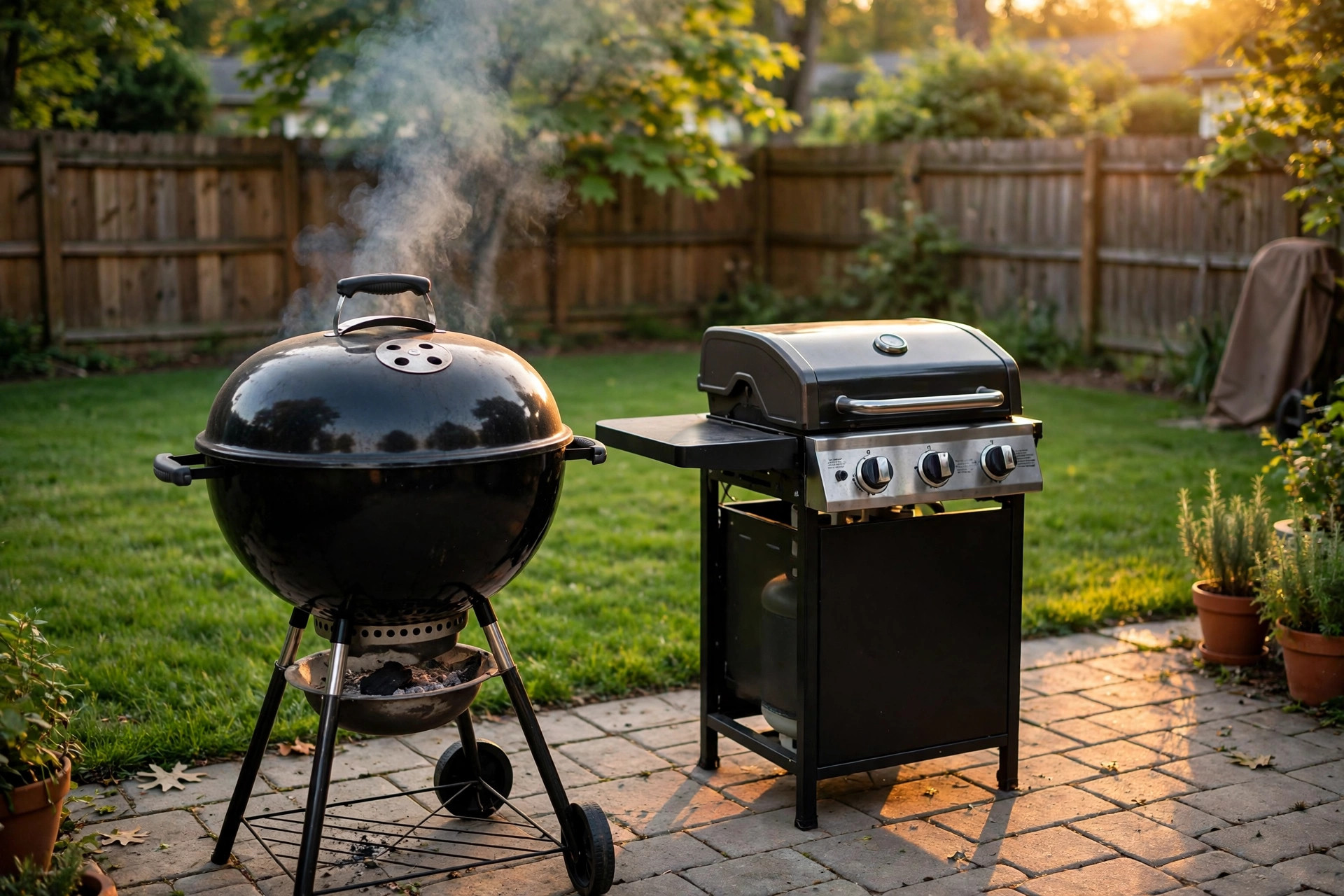
A charcoal kettle is the classic choice. It is a round bowl with a lid, a grate, and vents. Prices run from 80 to 180 dollars. The kettle shape moves hot air around the food. That gives you even heat for burgers and hot dogs.
Charcoal gives a smoky taste that gas cannot copy. Many cooks prefer that flavor. The trade is time. A chimney of charcoal takes 15 to 20 minutes to light and heat up. You must learn to read the vents. But the skill comes fast, usually within three or four cooks. Some cooks later step up to a ceramic kamado cooker for longer low-and-slow sessions, but a simple kettle is the right start.
If you want to dig deeper into charcoal models, our guide to the best charcoal grill for a backyard compares sizes and vent systems in plain terms.
Small Gas Grills
Gas grills light with a button. They heat up in about ten minutes. Most models under 200 dollars have two burners and a small cabinet or open cart. Prices run from 130 to 200 dollars.
Gas is easy. You turn the knob, press the igniter, and cook. Temperature control is simple. That is why many beginners choose gas first. The trade is fuel cost. A propane tank refill runs about 20 dollars in most towns, and you must store the tank safely.
A good source for learning the basics of gas grill care is the Char-Broil help section, which covers cleaning and part replacement for low cost models.
Electric Grills
Electric grills plug into a wall outlet. They make no smoke from fuel. They are legal on many apartment balconies where gas and charcoal are not allowed. Prices run from 100 to 180 dollars.
Electric grills heat slower than gas. They do not reach the same high heat. But they work well for burgers, fish, and vegetables. They are very easy to clean. Most have a nonstick surface that wipes down fast. Check your lease rules before you buy one.
Cost and Price: What Your 200 Dollars Buys
Expect to spend 130 to 200 dollars for the grill itself. Then plan for extras. A basic tool set with tongs, spatula, and fork costs about 20 dollars. A chimney starter for charcoal costs about 15 dollars. A bag of charcoal costs about 15 dollars. A propane tank costs about 40 dollars if you do not own one.
That means a full starter kit for charcoal runs about 180 to 230 dollars total. A full starter kit for gas runs about 200 to 260 dollars total. Both are close. Buy the extras that match your grill type. Skip fancy extras at first.
When you compare prices, look at the whole cost. A cheap grill that needs new grates every year costs more over time. Mid-range brands like Weber sell replacement parts for many models, which lowers the long-term cost.
Heat Control: The Skill That Matters Most
Heat control makes or breaks a meal. Learn two-zone cooking. For a gas grill, turn one burner to high and leave the other on low or off. Sear meat over the hot side. Move it to the cool side to finish. For charcoal, pile the coals on one side of the bowl. Leave the other side empty.
Use the lid. A closed lid cooks food faster and more evenly. It also calms flare-ups. Open the lid only to check or flip. Each time you lift the lid, heat escapes and the food takes longer.
Use a thermometer. A simple probe thermometer costs about 15 dollars. It tells you when chicken is safe at 165 degrees and when a steak is medium rare at 130 to 135 degrees. Guessing leads to dry meat or unsafe food. A wireless BBQ thermometer is a nice upgrade later, but a basic probe is enough to start.
Learn your hot spots. Most grills have a hot corner and a cool corner. Toast a layer of bread slices on the grate for one minute. The dark slices show the hot spots. Use that map on your next cook.
First Cooks: What to Make
Start with foods that forgive mistakes. Burgers are first. They cook fast and show you how your grill heats. Hot dogs are second. They are almost impossible to ruin. Chicken thighs are third. They stay juicy even if your heat is a little off.
Skip brisket and whole turkey at first. Large cuts need long, steady heat. They punish a beginner. Wait until you have ten cooks under your belt.
The Spruce Eats grilling basics page has step-by-step photos for simple first recipes like grilled corn and marinated chicken.
Care and Upkeep
Clean the grate after every cook. Heat the grill on high for ten minutes. Scrub the grate with a brush. A clean grate stops food from sticking and stops old grease from smoking.
Empty ash often. On a charcoal grill, pull the ash pan after the coals cool fully. Ash holds moisture. Wet ash causes rust. Do not dump hot ash in the trash. Wait a full day to be safe.
Check gas parts twice a year. Look at the burner tubes for clogs. Spiders like to nest in burner tubes. A thin brush clears them out. Check the hose for cracks. Smell for gas before you light the grill. If you smell gas, do not light it. Close the tank valve and call for help.
Cover the grill. A cover that fits well costs about 25 dollars. It keeps rain off the metal. Rain causes rust faster than anything else. A covered grill lasts years longer than an uncovered one. This is the cheapest way to protect your money.
Oil the grates lightly. After cleaning, wipe a thin layer of cooking oil on the grate with a paper towel. Use tongs to hold the towel. Thin oil stops rust and helps food release. Do this while the grate is still warm.
Store fuel right. Keep charcoal bags dry. Damp charcoal lights poorly. Keep propane tanks upright, outdoors, away from heat. Never store a propane tank indoors or in a car trunk for long.
Safety Rules Every Beginner Must Know
Set the grill in the open. Keep it at least ten feet from the house, the fence, and low branches. Heat rises and spreads. A grill too close to wood siding is a fire risk.
Never use a grill indoors. Never use it in a garage, even with the door open. Charcoal makes carbon monoxide. Gas grills can too. Carbon monoxide has no smell. It can kill. Cook outside only.
Watch children and pets. Set a three-foot no-go zone around the grill. Tell kids the grill is hot even when the fire looks out. Coals stay hot for hours. A charcoal kettle safety guide from Napoleon lists clear placement rules worth reading before your first cook.
Have water or a spray bottle ready. Small grease fires happen. A spray bottle calms most flare-ups. For a bigger fire, close the lid and the vents. This starves the fire of air. Never throw water on a grease fire in a pan. For gas, know where the tank shutoff is before you light up.
Check local rules. Some towns and apartment blocks ban charcoal or gas grills on balconies. Call your city office or read your lease. Fines are not worth it. Electric grills are often the only legal option on a balcony.
Let the grill cool fully. Coals can stay hot for a full day. Gas grills cool in about an hour. Do not cover a hot grill. Do not move a hot grill. Patience is part of safe grilling.
FAQ
What is the best bbq for beginners under 200 in 2026?
For most beginners, a 22-inch charcoal kettle or a two-burner gas grill is the best pick. The kettle costs less and gives smoky flavor. The gas grill lights faster and controls heat with a knob. Both fit under 200 dollars and both last years with a cover. Pick charcoal if you love smoky taste and do not mind a 20-minute start. Pick gas if you want dinner on the table fast.
Is a charcoal or gas grill better for a first grill?
Gas is easier to learn. Charcoal tastes better to many cooks. If your goal is fast weeknight dinners, gas wins. If your goal is weekend cookouts with smoky flavor, charcoal wins. Neither is wrong. Many people start with one and add the other later. A portable grill for camping is a cheap way to try the other fuel type without buying a full-size grill.
How long will a grill under 200 dollars last?
Three to seven years is normal. Charcoal kettles with thick porcelain coating last longest, often five to seven years. Cheap gas grills last three to five years before burners wear out. A cover adds years. Cleaning the grate and emptying ash add years too. Brands with replacement parts at major retailers let you fix a grill instead of replacing it.
Can I smoke meat on a grill under 200 dollars?
Yes, in a small way. On a charcoal kettle, pile coals on one side and add wood chips for smoke. Cook ribs or chicken on the cool side with the lid closed. On a gas grill, use a small smoker box filled with wood chips over one burner. You will not get the deep smoke of a real smoker. But you will get a clear smoke taste. For a real low-and-slow setup, see our notes on a beginner smoker under 300.
What tools do I need on day one?
You need long tongs, a spatula, a grill brush, and a probe thermometer. That is enough. A chimney starter is needed for charcoal. A spray bottle helps with flare-ups. Skip the 20-piece tool sets at first. Buy the basics and add tools as you learn what you like to cook. Consumer Reports grill ratings can help you compare tool quality if you want tested picks.
How do I keep food from sticking to the grate?
Heat the grate first. Scrub it clean. Then oil it lightly with a paper towel held by tongs. Put the food down and leave it alone for two minutes. Meat releases on its own when it forms a crust. If you try to flip too early, it sticks. Cold wet food sticks more, so pat meat dry before it hits the grate.
A Short Final Word
The best bbq for beginners under 200 is the one you will use. Pick the fuel that fits your life. Learn heat control. Clean the grate. Cover the grill. Your first cookout does not need to be perfect. It needs to be safe and fun. Skill grows with every cook.
References
Big Green Egg. (n.d.). Kamado grills and outdoor cooking. https://www.biggreenegg.com Char-Broil. (n.d.). Gas and charcoal grills. https://www.charbroil.com Consumer Reports. (n.d.). Product reviews and ratings. https://www.consumerreports.org Napoleon. (n.d.). Fireplaces, grills, and heating products. https://www.napoleon.com The Home Depot. (n.d.). Home improvement products. https://www.homedepot.com The Spruce Eats. (n.d.). Recipes and cooking guides. https://www.thespruceeats.com Traeger. (n.d.). Wood pellet grills. https://www.traeger.com Weber. (n.d.). Grills and outdoor cooking. https://www.weber.com
Was this guide helpful?

About James Carter
The My Garden US editorial team writes practical, in-depth home and garden guides for American homeowners — tested advice, no fluff.