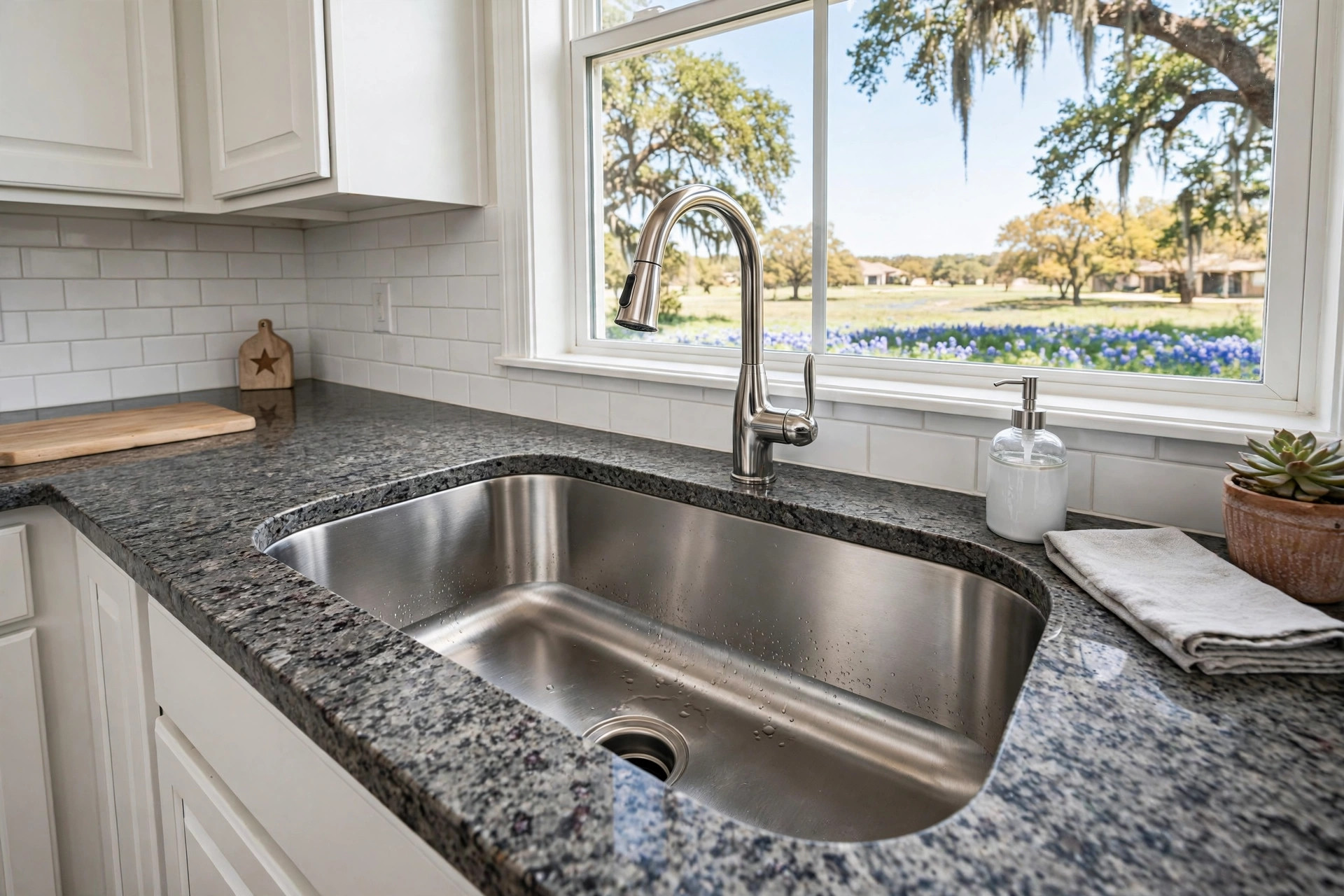

The search for undermount stainless sinks for Texas homes USA starts with a simple question. Which sink will hold up to daily use and still look good in ten years. An undermount sink mounts below the countertop. The edge of the counter shows around the bowl. There is no rim on top to catch crumbs.
Texas homes put extra demands on a kitchen sink. Families cook large meals. Pots are heavy. Cast iron skillets are common. Water in many parts of the state runs hard. A good stainless sink stands up to all of this. This guide walks through the facts a buyer needs. It covers why undermount models suit Texas kitchens, how to choose the right one, what types exist, what they cost, and how to keep the steel bright for years.
Why Undermount Sinks Matter in Texas Homes
Kitchens in Texas often serve as the true center of the house. Guests gather around the island. Meals are large and frequent. A sink sees heavy traffic every day. Crumbs and spills wipe directly from the counter into the bowl. There is no raised lip to work around.
Stainless steel suits the Texas kitchen well. It takes heat from hot pans. It resists chips and cracks. Unlike porcelain, it does not crack if a heavy pot slips. Unlike cast iron, it is light enough for one strong person to lift during install. It also costs less than many stone composite sinks.
The material pairs well with the countertop materials common in Texas homes. Granite and quartz counters are popular across the state. An undermount sink works best with a solid surface counter. The sink clips and seals to the underside of the slab. Stone fabricators cut the opening to match the sink model. Many homeowners plan the sink and the counter together when they remodel. Guides on home centers such as Home Depot show how sink choice and counter choice go hand in hand.
Water quality is another reason steel is a sound pick. Hard water leaves mineral spots on many surfaces. Stainless steel can spot too, but a quick wipe with a dry cloth clears it. Homeowners in areas with very hard water often prefer a brushed finish. It hides water marks better than a mirror finish.
How to Choose the Right Sink: Undermount Stainless Sinks Texas Homes Usa
Choosing a sink is mostly a matter of five points. Steel grade, gauge, size, bowl style, and finish. Each point is easy to understand once the terms are clear.
Steel Grade
Most kitchen sinks use grade 304 stainless steel. It contains nickel and chromium. These metals give the steel its resistance to rust and stains. Grade 304 is the safe standard pick. Some budget sinks use grade 201. It has less nickel. It costs less, but it resists corrosion less well. In a hot, humid kitchen it can show rust spots sooner. For a Texas home, grade 304 is the better value over time. The product label or spec sheet should state the grade plainly.
Gauge
Gauge measures the thickness of the steel. The scale runs backward. A lower number means thicker steel. Most quality sinks are 18 gauge. Heavy duty models are 16 gauge. Thin budget models may be 20 or 22 gauge. Thicker steel dents less and rings less. Thin steel can sound tinny when water hits it. It can also flex under the weight of a full pot.
An 18 gauge sink is a solid middle ground for most families. A 16 gauge sink is worth the extra money if the household cooks a lot or washes heavy cookware by hand. Test reports from groups like Consumer Reports often note how thickness affects both noise and durability. The difference in price between 18 and 16 gauge is modest. The difference in feel is clear.
Size and Depth
Standard base cabinets in American kitchens are 36 inches wide. A single bowl sink for such a cabinet is often 30 to 33 inches wide. Double bowl sinks split that width. Measure the cabinet first. The sink must fit inside with room for clips and plumbing.
Depth matters too. A deep bowl, around 9 or 10 inches, holds tall stockpots. It hides dirty dishes. But a very deep sink can strain the backs of shorter cooks. A depth of 8 to 10 inches suits most people. Texas kitchens with large families often favor the deeper end of that range.
Bowl Style
Single bowl sinks give one large open space. They fit sheet pans and roasting pans. They are the top pick for serious cooks. Double bowl sinks give two smaller spaces. One side can hold soapy water while the other rinses. Equal double bowls split the sink in half. Offset or low divide models give one large and one small bowl. A low divide keeps most of the single bowl space while adding a second zone.
Workstation sinks are a newer style. They add a track along the rim. Cutting boards and colanders slide across the top. This style suits cooks who prep at the sink. It costs more but adds real function.
Finish
Brushed satin is the most common finish. It hides scratches well. Polished mirror finishes look striking but show every mark. For a busy family kitchen, brushed is the practical choice.
Types and Options Worth Knowing
Undermount stainless sinks come in several builds. Pressed sinks are stamped from a single sheet of steel. They have rounded corners. They cost less. Fabricated sinks are welded from flat sheets. They have sharp, square corners. They look modern. The welds are ground smooth, but sharp corners can be harder to clean.
Handmade sinks are a popular category. They are usually 16 gauge and fully welded with tight corners. They often include sound pads and a protective undercoating. They cost more than pressed sinks but less than designer brands. Many Texas remodelers favor them for the price to quality ratio.
Sound deadening matters more than buyers expect. Water drumming on thin steel is loud. Good sinks add rubber pads and spray coating to the underside. This cuts noise sharply. If the spec sheet does not mention sound pads, the sink is likely loud.
Accessories extend the value of a sink. Bottom grids protect the steel from scratches. Colanders and cutting boards that fit the rim add workspace. Homeowners planning a full kitchen refresh often match the sink to new appliances. Advice on kitchen layouts from This Old House shows how the sink, dishwasher, and range work as one unit. Brands such as GE Appliances, Whirlpool, and Bosch all build dishwashers sized to sit beside a standard sink run.
Drain style is a small but real choice. A standard drain uses a basket strainer. A disposal flange fits a garbage disposal. Most disposals use a standard 3.5 inch opening. If no disposal is planned, a simple basket strainer keeps the look clean.
Cost and Price
Prices for undermount stainless sinks span a wide range. A basic pressed 20 gauge single bowl sink can cost as little as 100 to 150 dollars. A quality 18 gauge model from a known brand runs 250 to 450 dollars. A heavy 16 gauge handmade workstation sink can reach 500 to 800 dollars. These are 2026 prices at major retailers such as Lowe’s and Home Depot.
Installation adds cost. A stone fabricator usually cuts the counter opening and sets the sink during counter install. Many bundle the sink set into the counter price. If the sink is added to an existing counter, a plumber or handyman charges for the job. Expect 150 to 400 dollars for labor, depending on the market. Texas metro areas like Houston and Dallas sit near the middle of that range. Rural areas may cost less. Complex jobs with a disposal or new plumbing cost more.
The total project cost stays modest next to a full kitchen remodel. A sink swap is one of the cheapest ways to refresh a kitchen. Homeowners often pair the new sink with new pantry cabinets built for Texas homes or new hanging lights over the kitchen island. Small upgrades together change the feel of the room without a full tear out.
Do not forget the extras. A bottom grid runs 30 to 60 dollars. A fitted cutting board runs 40 to 80 dollars. A good basket strainer or disposal flange runs 20 to 50 dollars. Add these to the budget before shopping.
Care and Upkeep
Stainless steel is low care, not no care. Daily habits keep it bright. Rinse the sink after each use. Wipe it dry with a soft cloth. Texas hard water makes this habit pay off fast.
For weekly cleaning, use warm water and a mild dish soap. A soft sponge or cloth is enough. Rub with the grain of the brushed finish, not across it. Rinse well. Dry the surface. Cleaning guides from The Spruce stress the same simple routine. Mild cleaners do the best long term work.
For stains and dull spots, make a paste of baking soda and water. Rub gently with the grain. Rinse and dry. White vinegar cuts hard water scale. Spray it on, wait a few minutes, and rinse. For a deeper shine, a stainless steel polish made for kitchen sinks works well. Use it sparingly.
Avoid harsh treatment. Do not use steel wool or stiff wire brushes. They scratch the finish. Do not use bleach or cleaners with chlorine. They can pit the steel over time. Do not leave cast iron pans sitting wet in the sink for hours. The iron can leave rust marks that bond to the steel. A bottom grid stops most contact damage.
Check the caulk line once a year. The seal between the sink and the counter keeps water out of the cabinet. If the caulk pulls away or cracks, scrape it out and reseal. A tube of kitchen grade silicone costs a few dollars. This small job stops cabinet damage.
Safety Notes
A sink install has real safety points. A heavy 16 gauge sink with a disposal attached can weigh 40 pounds or more. Lift with the legs, not the back. Get help for the set. Sharp cut edges on the cabinet opening can cut hands. Wear work gloves.
Plumbing work means water shutoffs. Turn off the supply valves before disconnecting lines. Keep a bucket and towels nearby. A small leak during install is normal.
Garbage disposals need care. Always run cold water while the disposal runs. Never put a hand inside, even when it is off. Use tongs to clear a jam after the power is cut at the breaker. Homeowners adding a dishwasher next to the sink can check efficiency ratings on Energy Star to keep the whole kitchen water wise.
Frequently Asked Questions
Can an undermount sink go in any countertop? No. Undermount sinks need a solid countertop, such as granite, quartz, or solid surface. They do not work with laminate counters. Laminate is too thin and weak to hold the clips. A top mount sink is the right pick for laminate.
What gauge is best for a family kitchen? An 18 gauge sink suits most families. It resists dents and stays quiet. A 16 gauge sink is thicker and tougher. It is a good pick for heavy cooks. Avoid 20 gauge or thinner for a main kitchen sink.
Does stainless steel rust? Quality 304 stainless steel resists rust well. It is not fully rust proof. Iron particles from steel wool or cast iron can sit on the surface and rust. Harsh chemicals can damage the surface. Normal care with mild cleaners keeps rust away.
How long does an undermount stainless sink last? A quality sink lasts 15 to 30 years. Thicker steel lasts longer. Good care adds years. The caulk seal may need renewal every 5 to 10 years. The steel itself rarely wears out.
Can I install an undermount sink myself? A skilled homeowner can do it with a solid surface counter already in place. The job needs careful measuring, strong clips, and a clean caulk line. Most people hire a pro. The risk of a bad seal or a dropped sink makes the labor cost worth it. This is one job where a mistake costs more than the savings.
Is a single or double bowl better? It depends on habits. Single bowls fit large pans and suit serious cooks. Double bowls suit households that soak and rinse by hand. A low divide model splits the difference. Think about the largest item washed by hand. If a roasting pan must fit flat, pick a single bowl.
A Final Word
An undermount stainless sink is a quiet workhorse. It asks little and gives much. For Texas homes, where kitchens work hard, it is one of the safest choices a buyer can make. Pick grade 304 steel. Pick 18 gauge or thicker. Measure the cabinet. Match the sink to the counter. Spend the savings on a bottom grid and a good faucet.
Some homeowners treat the sink as the start of a larger refresh. A new sink pairs well with fresh paint, new cabinet hardware, or even an under-counter wine fridge for the home bar. Each small upgrade builds on the last. The sink, though, is the one upgrade used every single day. Choose it well and it will serve the household for decades.
References
Bosch. (n.d.). Home appliances. https://www.bosch-home.com Consumer Reports. (n.d.). Product reviews and ratings. https://www.consumerreports.org ENERGY STAR. (n.d.). Energy efficient products. https://www.energystar.gov GE Appliances. (n.d.). Kitchen and home appliances. https://www.geappliances.com Lowe’s. (n.d.). Home improvement products. https://www.lowes.com The Home Depot. (n.d.). Home improvement products. https://www.homedepot.com The Spruce. (n.d.). Home and garden advice. https://www.thespruce.com This Old House. (n.d.). Home renovation guidance. https://www.thisoldhouse.com Whirlpool. (n.d.). Home appliances. https://www.whirlpool.com
Was this guide helpful?

About Michael Thompson
The My Garden US editorial team writes practical, in-depth home and garden guides for American homeowners — tested advice, no fluff.
You May Also Like
Undermount Stainless Sinks Deals Near Me: A Plain Guide for American Kitchens
April 26, 2026 0 views
Garbage Disposal Installation Deals Near Me: A Plain Guide for Homeowners
August 3, 2026 0 views
Quartz Countertop Installation USA Online Deals: A Plain Guide for Homeowners
June 15, 2026 0 views