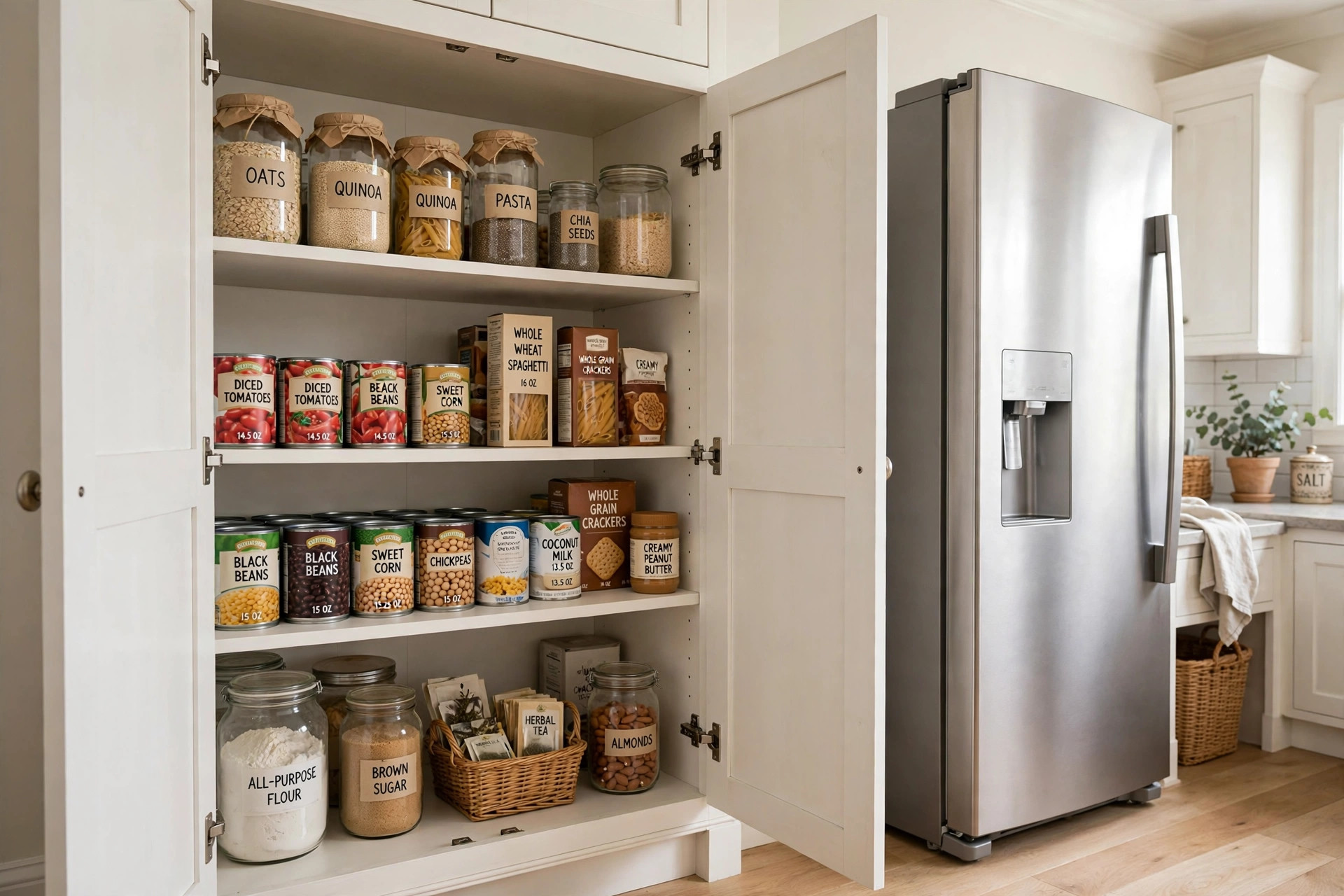

Every kitchen needs a place for dry goods, canned food, and baking supplies. A tall pantry cabinet gives you that place. It stands against the wall, holds rows of shelves, and keeps food neat and close at hand. If your kitchen has no built-in pantry closet, a freestanding pantry cabinet is the answer.
The question many shoppers ask is simple: kitchen pantry cabinets where to buy usa. This guide answers it. It lists the best kinds of stores, explains what to look for, gives honest price ranges, and ends with care tips and answers to common questions.
Why a Pantry Cabinet Matters
A pantry cabinet does more than store food. It changes how a kitchen works. When flour, rice, spices, and canned goods sit in one tall unit, meal prep gets faster. You see everything at a glance. You waste less food because nothing hides in the back of a deep shelf.
Older kitchens often lack a walk-in pantry. Newer homes may have one, but many apartments and small houses do not. A pantry cabinet fills the gap. It uses vertical space, so it fits in a narrow spot beside the fridge or at the end of a counter run.
A good cabinet also protects food. Closed doors block light, which keeps oils and spices fresh longer. Adjustable shelves let you fit tall cereal boxes on one level and small jars on another. Some models add pull-out shelves or baskets that slide forward, so you never dig through clutter.
Where to Buy Kitchen Pantry Cabinets in the USA: Kitchen Pantry Cabinets Where to Buy Usa
Now to the main point. When people search for kitchen pantry cabinets where to buy usa, they want real store names and real options. Here are the best places to look, from big chains to custom shops.
Big-Box Home Improvement Stores
Stores like Home Depot and Lowe’s are the most common answer to the question of where to buy kitchen pantry cabinets. Both carry a wide range of stock pantry cabinets from well-known cabinet brands. You can walk in, see the unit in person, open the doors, and test the shelves. Prices start low for ready-to-assemble units and rise for pre-finished hardwood models.
These stores also sell pantry cabinets through their websites with home delivery. That helps if the nearest store is far away. Many models qualify for free delivery, and installation services can be booked at the same time. For shoppers who want to compare brands side by side, these two retailers are hard to beat.
Furniture and Home Goods Retailers
Chain furniture stores and online home-goods sellers stock freestanding pantry cabinets too. These tend to look more like furniture than kitchen cabinetry. You will find painted finishes, glass doors, and farmhouse styles that big-box stores may not carry. Look for solid construction and full backs so the unit does not tip or wobble.
Appliance and Kitchen Specialists
Companies known for kitchen equipment sometimes sell storage units as well. For example, Whirlpool and GE Appliances are known for major appliances, but the same showrooms and dealer networks often guide shoppers toward kitchen storage solutions. European-style lines such as Bosch set a high bar for clean design, which many pantry cabinet makers follow. While you shop, it is worth checking ENERGY STAR guidance on kitchen planning, since a well-planned kitchen saves both space and energy.
Cabinet Showrooms and Kitchen Dealers
Local kitchen and bath dealers sell semi-custom and custom pantry cabinets. You choose the wood species, the door style, the finish, and the interior fittings. A dealer measures your space and orders the unit built to fit. This path costs more, but the fit and finish are better. It suits kitchen remodels where the pantry cabinet must match the rest of the cabinetry.
If you are planning a larger project, reading the kitchen guides at This Old House can help you talk to dealers with confidence. Bob Vila’s advice pages also cover cabinetry basics in plain terms.
Online Marketplaces
Online marketplaces let you compare dozens of pantry cabinets in one sitting. Independent ratings from groups like Consumer Reports can help you sort strong brands from weak ones before you buy. The Spruce publishes tested roundups of kitchen storage that many shoppers trust. Online prices often run lower than store prices, but check the shipping terms. A tall cabinet is heavy, and freight delivery may add cost.
Used and Salvage Options
Do not overlook salvage yards, habitat restore shops, and local classified ads. Old houses torn down for new builds often yield solid wood pantry cabinets at a fraction of new prices. A coat of paint and new hardware can make an old unit look brand new. Measure carefully, since used pieces cannot be returned easily.
What to Look for When You Buy
Price is only one part of the choice. A pantry cabinet is a piece you will use every day for years. Judge it the way you would judge any workhorse furniture.
Construction and Materials
Solid wood costs the most and lasts the longest. Plywood boxes with solid wood doors are a strong middle choice. Particleboard and MDF keep the price down, but they swell if they get wet and they hold screws less firmly. For a pantry that holds heavy cans and jars, plywood or solid wood shelves are worth the extra money.
Size and Fit
Measure your space before you shop. Note the width, the depth, and the ceiling height. A standard pantry cabinet is 84 to 96 inches tall and 12 to 24 inches deep. Leave room for the doors to swing open fully. If the unit will stand beside a refrigerator, match its depth so the front lines look even.
Shelves and Interior Fittings
Adjustable shelves are the most useful feature. Look for shelf pins on many levels, not just three or four. Pull-out shelves, spice racks on the doors, and wire baskets all make the cabinet easier to use. Check that shelves are thick enough to carry weight without bowing. Three-quarter-inch plywood shelves are a good standard.
Finish and Style
The finish should match or blend with your kitchen. White painted cabinets suit most rooms. Stained wood warms up a modern kitchen. Glass-front doors look nice but show clutter, so they suit tidy households. Unfinished cabinets cost less and let you paint or stain to match exactly.
Types of Pantry Cabinets
Freestanding Pantry Cabinets
These stand alone and move with you. They need no installation beyond leveling. They are the top choice for renters and for anyone who wants a quick upgrade. Most of the units sold at big-box stores fall in this group.
Built-In Pantry Cabinets
Built-in units are fixed to the wall and trimmed to look like part of the kitchen. A dealer or carpenter installs them during a remodel. They cost more, but they look seamless and use every inch of space.
Pull-Out Pantry Units
A pull-out pantry is a narrow cabinet that slides out like a drawer. It fits in gaps as small as six inches wide, such as the space beside a stove. It is ideal for spices, oils, and cans. You buy the hardware and the cabinet box together from a cabinet dealer or a hardware supplier.
Corner Pantry Cabinets
Corner units turn dead corner space into storage. Lazy susan shelves or swing-out trays bring items within reach. They work best in larger kitchens where the corner would otherwise go to waste.
Cost and Price Ranges
Prices for kitchen pantry cabinets in the USA fall into clear bands. Ready-to-assemble units from big-box stores start around 100 to 250 dollars. These are usually particleboard with a printed finish. Assembled stock cabinets run 250 to 600 dollars. Semi-custom units from a dealer start near 800 dollars and rise past 2,000 dollars for premium wood and fittings. Fully custom built-in pantries can exceed 3,000 dollars.
Delivery and installation add to the bill. In-store pickup is free. Home delivery often runs 50 to 100 dollars. Professional installation of a built-in unit can add 200 to 500 dollars. Used cabinets from salvage shops often sell for 50 to 200 dollars, a true bargain if the bones are sound.
Set a budget before you shop. A 400-dollar stock cabinet with pull-out shelves may serve you better than a 1,200-dollar custom unit without them. Spend on function first and finish second.
Care and Upkeep
A pantry cabinet needs little care, but small habits keep it in good shape for decades. Wipe spills at once, since moisture is the enemy of wood and particleboard. Line shelves with washable shelf paper to catch drips from jars. Once a year, pull everything out, wipe the shelves, and check dates on stored food.
Tighten screws and shelf pins now and then. Heavy loads can loosen hardware over time. If a door starts to rub, adjust the hinges; most modern hinges have small screws that move the door in tiny steps. Keep the cabinet away from direct steam and heat, such as the spot right beside a range, unless the finish is rated for it.
Safety Tips
Anchor tall pantry cabinets to the wall with anti-tip brackets. A fully loaded cabinet is top-heavy and can tip forward if a child climbs it. This step takes ten minutes and prevents serious injury. Keep heavy items on low shelves and light items up high. Store cleaning products away from food, ideally in a separate cabinet with a child lock. If you buy a used cabinet, check for lead paint if it was made before 1978, and refinish it safely or leave it alone.
Frequently Asked Questions
How wide should a kitchen pantry cabinet be?
For most kitchens, 18 to 24 inches wide works well. Narrow units fit small gaps. Wider units hold more but need more floor space. Always measure your spot and the door swing before you buy.
Can I install a pantry cabinet myself?
Yes, if it is freestanding. You only need to level it and anchor it to the wall. Built-in units are harder; they need trim work and a level fit, so many owners hire a carpenter.
What is the best material for pantry cabinet shelves?
Three-quarter-inch plywood is the best common choice. It holds heavy cans without bowing and resists moisture better than particleboard. Solid wood works well too but costs more.
Are pull-out shelves worth the extra cost?
For most people, yes. Pull-out shelves let you see and reach everything, so food does not get lost in the back. They add 100 to 300 dollars to the price but pay back in daily ease of use.
Where can I find a pantry cabinet that matches my existing cabinets?
Start with the brand of your current cabinets. Most cabinet lines sell matching pantry units. If your cabinets are old, a local dealer can often match the door style and finish, or build a custom unit to blend in.
Should I buy a pantry cabinet online or in a store?
In a store, you can touch the unit and judge its build. Online, you get more choice and often lower prices. A good middle path is to look at models in a store, then order the same model online if the price is better.
A Short Final Word
The search for kitchen pantry cabinets where to buy usa ends with a simple plan. Measure your space. Set your budget. Visit a big-box store to see units in person. Compare prices online. Read reviews from trusted testers. Then buy the sturdiest cabinet you can afford, anchor it to the wall, and fill it with the food your family loves. A good pantry cabinet is not a luxury. It is one of the hardest-working pieces in the kitchen.
For more kitchen project ideas, see our guides on kitchen backsplash tiles buying guide usa, stainless range hoods buying guide usa, and kitchen backsplash tiles usa online deals.
References
Bob Vila. (n.d.). Home improvement advice. https://www.bobvila.com Bosch. (n.d.). Home appliances. https://www.bosch-home.com Consumer Reports. (n.d.). Product reviews and ratings. https://www.consumerreports.org ENERGY STAR. (n.d.). Energy efficient products. https://www.energystar.gov GE Appliances. (n.d.). Kitchen and home appliances. https://www.geappliances.com Lowe’s. (n.d.). Home improvement products. https://www.lowes.com The Home Depot. (n.d.). Home improvement products. https://www.homedepot.com The Spruce. (n.d.). Home and garden advice. https://www.thespruce.com This Old House. (n.d.). Home renovation guidance. https://www.thisoldhouse.com Whirlpool. (n.d.). Home appliances. https://www.whirlpool.com
Was this guide helpful?

About Jennifer Lee
The My Garden US editorial team writes practical, in-depth home and garden guides for American homeowners — tested advice, no fluff.
You May Also Like
Where to Buy Pot Filler Faucets in the USA
September 3, 2026 0 views
A Practical Guide to Double Wall Ovens in American Homes
July 22, 2026 0 views
Kitchen Island Seating for Sale USA: A Buyer’s Guide
June 13, 2026 0 views