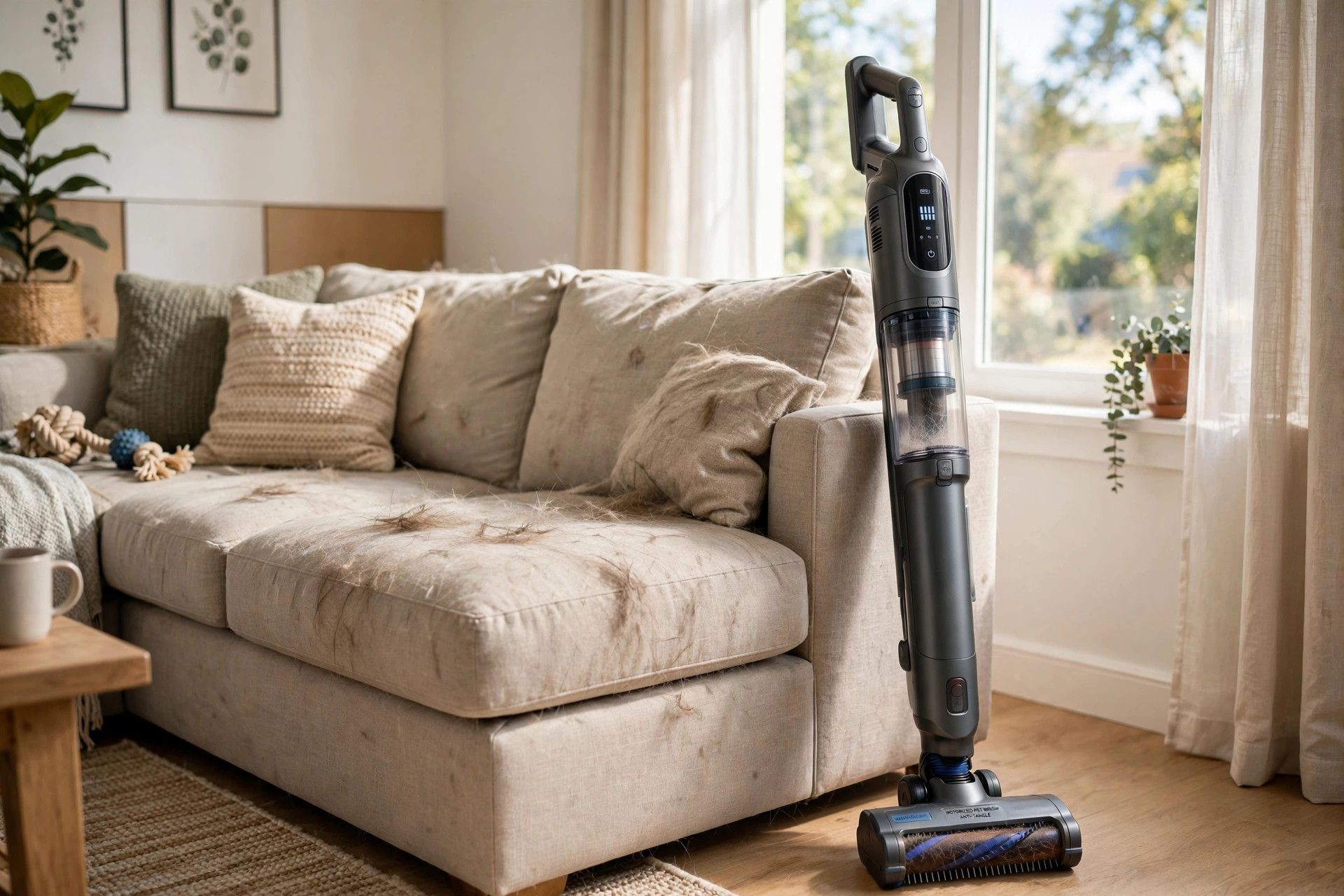

Dogs bring joy to a house. They also bring hair. A dog owner knows the look of a couch covered in fine hair. Finding the best pet vacuum for dog hair on furniture is the first step to a clean home. Not every vacuum can do this job. Hair wraps around the brush. Suction fades. The motor strains. A vacuum made for pet hair is built to solve these problems.
This guide explains what to look for, which types work best on a sofa or armchair, and what you should expect to pay. It also covers care, safety, and the questions buyers ask most often.
Why Dog Hair on Furniture Is So Hard to Remove
Dog hair is light. It floats. Then it settles into fabric. A couch cushion has thousands of small fibers. Hair works its way between them. Static charge makes it worse. Dry air in winter makes hair cling even tighter.
Shedding happens all year. Spring and fall are the worst months for most breeds. Long-haired dogs leave more on furniture. Short-haired dogs leave hair that sticks like small pins. Neither is easy to remove by hand.
Lint rollers help on a small spot. But they do not clean deep. A vacuum with strong suction pulls hair out of the fabric weave. A rotating brush lifts hair that suction alone cannot reach. That is why the best pet vacuum for dog hair on furniture always has a motorized brush tool.
Dogs also bring dander. Dander is tiny skin flakes. It hides in upholstery and can bother people with allergies. A vacuum with a sealed filter traps dander instead of blowing it back into the room. PetMD offers guidance on shedding and dander and how regular cleaning helps keep them under control PetMD.
What to Look for When You Choose: Best Pet Vacuum for Dog Hair on Furniture
Strong, Steady Suction
Suction is the power that lifts hair out of fabric. A weak vacuum leaves hair behind. Look for a model that keeps suction steady when the dust cup fills. Many pet vacuums use cyclonic design. This keeps air flow strong as the cup fills with hair.
Test reports from Consumer Reports compare suction across models and show which machines hold their power during long cleaning sessions Consumer Reports.
A Motorized Pet Tool
The brush tool matters more than anything else on a couch. A small powered brush head spins as you move it across the seat. The bristles loosen hair from fabric. The suction picks it up. Without this tool, you will fight the same hair twice.
Some vacuums include a wider upholstery tool. It is fine for smooth cushions. But deep fabric needs the powered mini brush. Make sure it is in the box before you buy.
Anti-Tangle Design
Hair wraps around a brush roll. This is the most common complaint from dog owners. Look for a brush roll built to resist tangles. Some designs use rubber fins instead of bristles. Others have combs inside the head that clear hair as it spins. Bissell and Shark both describe anti-tangle features on their pet vacuum pages Bissell Shark.
Even with anti-tangle design, check the roll once a month. Cut away any wrapped hair with scissors. This keeps the brush spinning free.
Sealed Filtration
A sealed system with a high-grade filter traps fine dust and dander. The air that comes out of the vacuum should be clean. This matters in a home with allergy sufferers. The filter should be easy to remove and wash or replace. Check the cost of replacement filters before you buy. They add up over the years.
Corded or Cordless
Corded vacuums give full power without a pause. You can clean every cushion in the house at once. The cord limits how far you can reach. A cord of 25 feet or more is fine for a living room.
Cordless stick vacuums are lighter. They are easy to grab for a quick pass over the couch. The battery runs down after 20 to 40 minutes. Suction can drop in the last minutes. Dyson publishes run times for its cordless models so buyers know what to expect Dyson.
For furniture alone, cordless is often enough. For a whole house with two dogs, a corded model saves time.
Weight and Size
You will lift this vacuum onto the couch. You will reach behind cushions. A light machine is easier to use. Handheld pet vacuums weigh under five pounds. Full-size uprights weigh much more. Pick a weight you can hold with one hand while you guide the tool with the other.
Types of Pet Vacuums for Furniture
Upright Vacuums
Upright vacuums stand on their own. They have wide brush heads for floors. Most include a hose and an upholstery tool for furniture. They are strong on carpet. On a couch they are less handy. The body is bulky. You must use the hose tool, and the hose can be short.
Uprights suit a home where the main job is carpet, and the couch is a second job. They are often the lowest price per unit of power.
Canister Vacuums
A canister vacuum has a body that rolls behind you. A long hose connects to a wand and tool head. This design is excellent for furniture. The head is small. It turns easily on cushions. It reaches into corners and under armrests.
Canisters are quiet. They are heavier to carry up stairs, but on one floor they are smooth to use. They often cost more than uprights.
Handheld Vacuums
Handheld pet vacuums are small. They are made for spots. Crumbs on a chair. Hair on a single cushion. A motorized pet brush head makes a big difference here. The dust cup is small, so you empty it often.
A handheld is a good second vacuum. It lives near the couch. You use it daily. The main vacuum does the deep clean once a week. Home Depot lists many handheld pet models with customer ratings that help you compare Home Depot.
Stick Vacuums
Stick vacuums are slim and light. They work on floors and furniture. Many come with a powered pet brush. They store in a closet corner. Most are cordless.
A stick vacuum can be the only vacuum in a small home. It handles a couch well. But the battery limits long sessions. The dust cup is small. For heavy shedding, you may empty it three times per couch.
Cost and Price
Pet vacuums for furniture range from about 40 dollars to over 600 dollars. Price follows power, battery, and brand name.
Budget handheld models cost 40 to 100 dollars. They clean a couch fine. They have small cups and short cords or batteries. They suit one small dog.
Mid-range stick and upright models cost 150 to 300 dollars. This is the sweet spot for most dog owners. You get a powered pet tool, decent filtration, and fair build quality.
High-end models cost 350 to 650 dollars. They offer the strongest suction, the longest battery life, and the best filtration. They suit homes with two or more heavy-shedding dogs.
Remember the hidden costs. Replacement filters cost 10 to 30 dollars each. Brush rolls wear out. Bags, if the model uses them, cost money too. A cheap vacuum with costly filters can be dear in the long run. Chewy lists replacement parts and filters next to each vacuum so you can plan the real cost Chewy.
Care and Upkeep
A pet vacuum needs care to keep its power. Empty the dust cup before it is full. A full cup chokes air flow. Wash the filter as the maker directs. Let it dry fully before you put it back. A damp filter can smell.
Cut hair from the brush roll each month. Check the hose for clogs. A clogged hose cuts suction in half. Wipe the outside of the machine with a damp cloth.
Store the vacuum in a dry place. Heat from a garage in summer can age the battery in cordless models. Keep extra filters on hand so you can swap a dirty one right away.
A well-kept vacuum lasts five to eight years. The ASPCA notes that regular grooming also cuts shedding, which means less work for the vacuum ASPCA.
Keep the Furniture Clean Between Vacuums
A vacuum is one part of the plan. A few habits cut the hair load on your couch.
Brush your dog often. Five minutes with a brush removes loose hair before it lands on the sofa. The American Kennel Club suggests a regular grooming routine based on coat type American Kennel Club.
Use washable throws. Cover the spots where the dog sits. Wash the throws each week. This keeps most hair off the upholstery itself.
Give the dog a proper bed. A comfortable bed draws the dog away from the couch. Options like the best orthopedic dog bed for senior large dogs give older dogs joint support, while the best elevated dog bed for outdoor patio use keeps pets cool on warm days. In the car, a dog car seat cover for back seat protection keeps hair off the seats.
The Spruce Pets has simple guides on reducing pet hair around the house with these small daily steps The Spruce Pets.
Safety
Unplug a corded vacuum before you clean the brush roll. The brush can start by accident. Keep fingers clear of the moving brush.
Do not vacuum near the dog if it fears the noise. Let a nervous dog leave the room. Never let a child play with the vacuum as a toy.
Empty the dust cup into the trash. Do not breathe the dust. If you have allergies, wear a simple mask when you empty it.
Keep cords off walkways. A cord across a hall is a trip risk. Store the vacuum where it cannot fall on a child or pet.
Frequently Asked Questions
Can a regular vacuum clean dog hair from a couch?
It can pick up loose hair on top. It will fail on hair woven into fabric. A regular vacuum lacks the powered brush tool that lifts set-in hair. You will spend twice the time for half the result.
Is cordless strong enough for a fabric sofa?
Yes, for light daily cleaning. A cordless stick with a powered pet head handles a couch well. For a deep clean after heavy shedding, a corded model gives more steady power.
How often should I vacuum the furniture?
Once a week suits one low-shedding dog. Two to three times a week suits a heavy shedder. Daily quick passes with a handheld keep hair from building up between deep cleans.
Do pet vacuums help with allergies?
They help a lot. A sealed filter traps dander and fine dust. This lowers what floats in the air. Vacuuming alone does not cure allergies, but it cuts the load in the home.
Why does hair wrap around the brush roll?
Hair is thin and strong. The spinning roll catches it and winds it tight. Anti-tangle designs reduce this. Monthly cleaning of the roll stops the build-up that kills performance.
Should I get bags or bagless?
Bagless is common in pet vacuums. You see when the cup is full. Emptying a cup of hair can send dust into the air. Bagged models keep the dust sealed in the bag. Bags cost money and must be replaced. Pick based on which trade-off you prefer.
Final Word
The best pet vacuum for dog hair on furniture is the one you will use often. Strong suction matters. A powered pet tool matters more. Match the type to your home: a handheld for quick passes, a stick for daily use, a canister for deep cleans. Keep the filter clean and the brush roll clear of hair. Add simple habits like brushing your dog and using washable throws. Your couch will stay clean, and your dog can keep its favorite seat.
References
American Kennel Club. (n.d.). Dog care and training resources. https://www.akc.org ASPCA. (n.d.). Pet care and animal welfare resources. https://www.aspca.org Bissell. (n.d.). Carpet cleaners and cleaning solutions. https://www.bissell.com Chewy. (n.d.). Pet supplies. https://www.chewy.com Consumer Reports. (n.d.). Product reviews and ratings. https://www.consumerreports.org Dyson. (n.d.). Vacuum cleaners and home technology. https://www.dyson.com PetMD. (n.d.). Pet health information. https://www.petmd.com Shark. (n.d.). Home cleaning appliances. https://www.sharkclean.com The Home Depot. (n.d.). Home improvement products. https://www.homedepot.com The Spruce Pets. (n.d.). Pet care guides and product reviews. https://www.thesprucepets.com
Was this guide helpful?

About James Carter
The My Garden US editorial team writes practical, in-depth home and garden guides for American homeowners — tested advice, no fluff.
You May Also Like

Dog Raincoat for Large Breeds: A Waterproof USA Buying Guide
June 10, 2026 0 views
Pet Gate with Walk Through Door for Kitchen: A Complete Guide
May 1, 2026 0 views
Heated Dog House for Winter Cold Climates: A Complete Buyer’s Guide
June 7, 2026 0 views