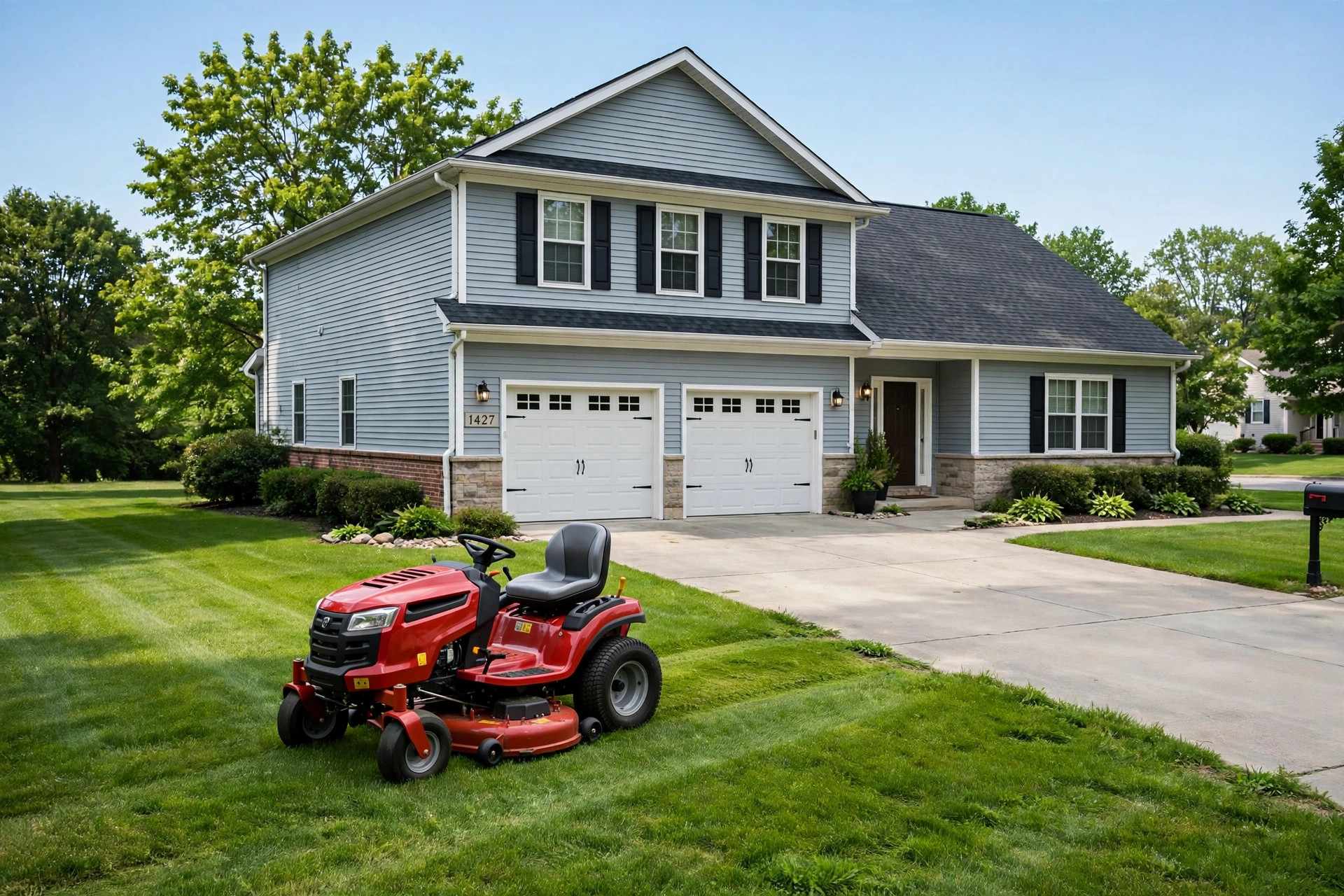

A good riding mower costs real money. Most new machines sell for twelve hundred to three thousand dollars. The big garden tractors cost more. Few buyers want to pay the full price at the cash register. That is why riding lawn mower financing options USA shoppers see at the dealer matter. A fair plan lets a family take the mower home today and pay for it month by month. A bad plan turns a good machine into a heavy debt. This guide walks through the choices in plain terms, so you know what to ask before you sign anything.
Why Financing Matters for a Riding Mower
A riding mower is not a small buy. For homes with a half acre or more of grass, it saves hours each week and years of strain on the back and knees. Many owners mow for twenty years with one good machine. The price is the only hard part. When a push mower wears out, a buyer can replace it the same day with a few hundred dollars. A riding mower needs a plan.
Financing spreads the cost across months or years. It lets a buyer step up to a machine that fits the yard instead of settling for one that is too small. A one acre lot calls for a true riding mower, as many guides to the best riding lawn mower for one acre lots explain. A machine that is too small breaks down sooner and mows slower.
There is a trade to accept. Every plan adds interest or fees. The total paid over time is more than the cash price. The question is never whether financing is free. It is whether the plan is fair and fits the household budget.
What to Look for in a Finance Plan: Riding Lawn Mower Financing Options Usa
Read the paper before you look at the mowers. That is the first rule. The dealer wants to sell a machine. Your job is to understand the money.
Start with the annual percentage rate, called the APR. It tells you the true yearly cost of the loan in one number. A lower APR means less money paid over time. Some plans advertise zero percent for a set number of months. These can be fair deals if you pay the full balance before the offer ends. Read the fine print. Many zero percent offers charge the full back interest on the whole purchase if even one dollar is left unpaid when the term ends. That surprise can add hundreds of dollars.
Next, look at the length of the loan. Plans run from six months to five years. A longer term means a lower monthly payment but more interest paid in total. A shorter term costs more each month but ends sooner. Pick a term that matches how long you plan to keep the mower. A machine that lasts fifteen years can carry a three year loan with ease. Do not stretch a five year loan on a mower you may replace in four.
Ask about the down payment. Some plans need none. Others ask for ten to twenty percent down. A down payment lowers the amount borrowed and the monthly bill. It also proves to the lender that the buyer is serious. If you can put money down without hurting your savings, do it.
Ask about fees. Some loans add a sign-up fee, a yearly fee, or a late fee. Ask the dealer to show every fee in writing before you sign.
Ask about early payoff. A fair loan lets you pay early with no penalty. Some plans charge a fee for paying off early. Avoid those.
Finally, check who the lender is. Dealer plans often run through a bank or a finance firm. The dealer may earn a fee for each loan signed. That is legal, but it means the dealer has reason to push the plan with the highest rate. You have the right to ask for the terms in writing and to walk away and think it over.
Types of Financing Options
Dealer Installment Plans
Most mower dealers offer their own payment plans through a lending partner. You pick the machine, fill out one form, and drive home the same day. Approval often takes minutes. These plans are built for equipment and tend to have clear terms for the machine you buy.
The upside is ease. The store handles the paper. Seasonal offers appear each spring, when mowers move fast. Zero percent for twelve months is a common pitch. The risk is the back interest trap described above, and rates that jump after the promo ends. Ask what the rate becomes after month twelve, and ask it in plain words.
Store Credit Cards
Large home and garden stores offer their own credit cards with special terms on big buys. Six or twelve months with no interest on purchases over a set amount is a standard offer. These cards are handy because one card covers the mower, a trailer, a bagger, and parts for years.
The danger is the same as with dealer plans. Miss the pay-off date and the back interest lands on the account. Store card rates after the promo are often high. Use the card as a tool, not as extra money.
Bank and Credit Union Loans
A personal loan from your own bank or credit union is often the cleanest path. You apply, the bank gives you the money, and you pay cash at the dealer. Cash buyers often get a better price because the dealer avoids card fees and finance paperwork.
Credit unions in particular tend to offer lower rates than store cards. The loan is separate from the mower, so a late payment does not let the dealer take the machine back.
Home Equity and Secured Loans
Some owners borrow against the value of their home. Rates can be low because the house secures the loan. This is a serious step. A mower is a tool, not a reason to risk the roof over your head. Only think about this path if the amount is small next to the home value and the rate is far better than other choices. Most buyers never need to go this far.
Rent to Own and Lease Plans
A few shops offer rent to own deals. You pay weekly or monthly and keep the mower after the last payment. These plans are easy to get because the credit check is light. They are also the most costly. The total paid can run double the cash price. Read every line. Many of these deals let the shop take the mower back after one missed payment, and the money paid so far is lost.
Manufacturer Promotions
Big mower makers run their own finance programs through partner banks. Makers like Toro and John Deere post seasonal offers on their sites, and engine builders like Briggs and Stratton list dealer networks that honor them. These programs can beat store cards because the maker wants the sale. Check the maker site before you visit the dealer.
Cost and Price: What the Numbers Look Like
A fair plan starts with a fair machine price. Prices shift each year, but the bands hold steady. Basic rear engine riders start near twelve hundred dollars. Mid range lawn tractors with forty two inch decks run from eighteen hundred to twenty six hundred dollars. Heavy garden tractors and zero turn mowers run from three thousand to five thousand dollars and more.
Do the math before you sign. Take the machine price, add tax, and add the total interest over the loan term. Divide by the number of months. That is the true monthly cost. A two thousand dollar mower at twelve percent for three years costs about sixty six dollars a month, and the total paid is near twenty four hundred dollars. The same mower at zero percent for one year costs about one hundred sixty seven dollars a month, and the total is the cash price plus tax. Both plans are honest. The buyer must pick the one that fits the budget.
Watch the add-ons. Baggers, mulch kits, carts, and covers add hundreds to the ticket. So do service plans and tire warranties. Some are worth it. A bagger for a big yard is a real help. An extended warranty on a new machine can pay for itself if the dealer service is good. But each add-on raises the loan balance and the interest. Buy the mower first. Add the extras only if the monthly payment still fits.
Trade-ins lower the price. If the old mower still runs, the dealer may take it off your hands. Even a few hundred dollars in trade cuts the loan and the interest. Private sales often bring more money, but they take time.
Care and Upkeep: Protecting Your Investment
A financed mower is still your machine, and it needs care. A mower that dies in year two while the loan runs to year three is the worst outcome. Simple upkeep keeps it alive.
Change the oil each season. Clean or replace the air filter. Keep the blades sharp. A dull blade tears grass and strains the engine. Check the tire pressure and the deck belt. A loose or cracked belt slips and burns. Guides to jobs like a riding mower deck belt replacement guide show how small fixes keep a financed machine earning its keep.
Store the mower dry. Gas goes stale. Use fresh fuel and a stabilizer if the machine sits for months. Keep the battery charged through winter. A dead battery in spring is a common and avoidable bill.
Keep the loan papers with the owner manual. Know the pay-off date for any promo rate. Mark it on the calendar two months early. That one habit saves more money than any coupon.
Safety on the Road to Ownership
Money safety matters as much as yard safety. Never sign a blank or half filled form. Never let a dealer rush you with a line like this offer ends today. Real offers return next week. Take the papers home if you need to.
Give personal data only at the store or on the lender’s own secure site. A finance form asks for your social security number and income. That is normal for a loan. It is not normal over a random phone call or a link in a text message. Scams grow each spring around big ticket yard gear.
At the yard level, a new rider needs respect. Read the safety chapter of the manual. Mow across slopes, never up and down. Keep kids and pets inside while the blades turn. A financed mower that causes an injury costs far more than money.
Frequently Asked Questions
What credit score do I need to finance a riding mower?
There is no single number. Store cards and dealer plans often approve scores in the mid six hundreds. The best rates go to scores above seven hundred. Below six hundred, expect higher rates or a demand for a down payment. A credit union may still work with you if you are a member in good standing. If your score is low, a larger down payment is the fastest way to get approved.
Is zero percent financing really free?
It can be, but only if you follow the rules. Pay the full balance before the promo ends, and pay on time every month. One late payment can end the offer. One dollar left unpaid at the end can trigger back interest on the whole purchase. Set auto pay and mark the end date on your calendar.
How long should the loan term be?
Match the term to the machine and the budget. Twelve to twenty four months suits most buyers and keeps interest low. Thirty six months is common and still fair for a good tractor. Beyond four years, the interest piles up and the mower ages faster than the loan ends. Shorter is cheaper. Longer is easier each month. Pick the shortest term whose payment you can meet without strain.
Can I finance a used riding mower?
Yes, but the terms differ. Banks offer used equipment loans, often with a higher rate than new. Some dealers finance their own used stock. Private sellers rarely offer plans, so buyers use a personal loan and pay cash. Have a mechanic check a used machine before you borrow. A cheap used mower with a bad transmission is no bargain at any rate.
Should I choose a robot mower instead and skip the loan?
It depends on the yard. Robot mowers suit small, simple lawns and cost less than many riders, as guides to the robot lawn mower for half acre yards point out. They do not suit steep slopes, rough ground, or big lots. If the yard truly needs a rider, financing the right machine beats buying the wrong one for cash.
What happens if I miss a payment?
Call the lender the same day. Most lenders waive one first late fee for a customer who calls and pays at once. A missed payment can raise your rate and hurt your credit score. Two or three missed payments can lead to repossession on a secured loan, which means the lender takes the mower. Auto pay is the simplest guard against all of this.
A Final Word
Riding lawn mower financing options USA buyers meet each spring are tools. Like any tool, they work well in careful hands. Know the APR. Know the term. Know the fees. Know the pay-off date. Compare the dealer plan with your bank before you sign. Then buy the mower that fits the yard, keep up with the care, and enjoy the short mowing days. For a second view on how machines are rated before you borrow, Consumer Reports publishes independent test results each season. A little homework now pays for itself every Saturday for years.
References
Briggs & Stratton. (n.d.). Outdoor power equipment engines. https://www.briggsandstratton.com Consumer Reports. (n.d.). Product ratings and reviews. https://www.consumerreports.org Deere & Company. (n.d.). Lawn care and agricultural equipment. https://www.deere.com Toro. (n.d.). Lawn mowers and yard equipment. https://www.toro.com
Was this guide helpful?

About David Wilson
The My Garden US editorial team writes practical, in-depth home and garden guides for American homeowners — tested advice, no fluff.
You May Also Like
Cheap Sod Installation Cost Per Pallet: A Plain Guide for Homeowners
March 16, 2026 0 views
Paver Walkway Installation Cost Near Me: A Simple Guide
June 23, 2026 0 views
How to Edge Lawn With String Trimmer: A Plain Guide for Homeowners
January 29, 2026 0 views