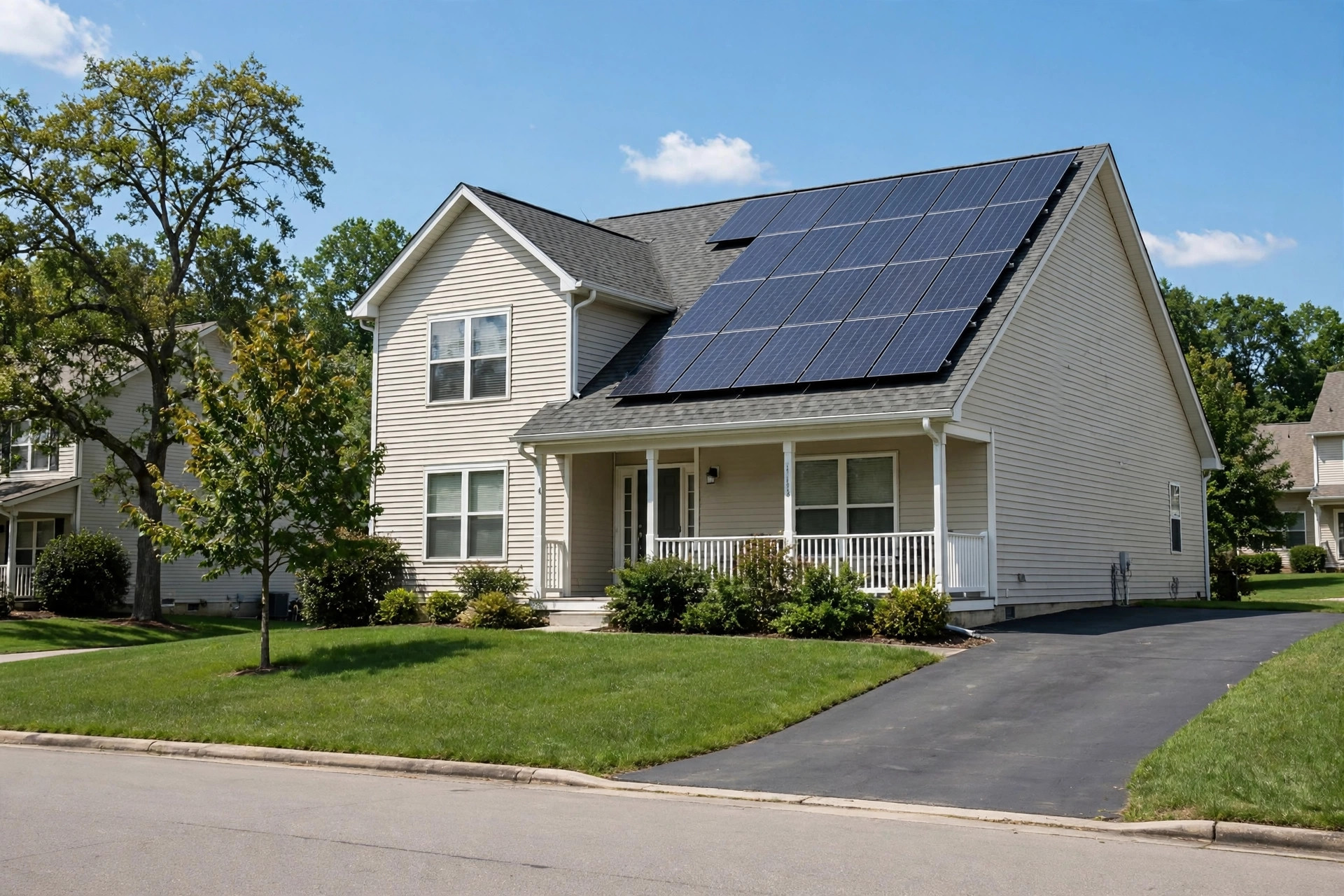

Rooftop solar has become a common sight across the United States. In 2026, more homeowners than ever are asking the same question: should they lease their panels or buy them outright? This solar lease vs buy comparison USA 2026 gives a plain answer. It looks at cost, savings, ownership, and risk. The goal is simple. By the end, you will know which path fits your home and your budget.
The choice matters because solar is a long promise. A lease often lasts 20 to 25 years. A purchased system can serve your home for 25 to 30 years or more. Small differences in price and terms add up over that span. A careful look now can save you thousands later.
Why the Solar Lease vs Buy Choice Matters
Electric bills keep climbing in many states. Solar panels offer a way to make your own power and shrink that bill. Both leasing and buying can do this. But they do it in very different ways.
Leasing means a solar company owns the panels on your roof. You pay a monthly fee to use the power they make. Buying means the panels are yours. You pay once, or through a loan, and keep the savings. Each choice has clear trade offs. A lease asks for little money up front. A purchase asks for more money now but often pays back more over time.
Your roof, your credit, your tax situation, and your plans to stay or move all play a part. No single answer fits every home. That is why a side-by-side look helps.
How Leasing Solar Panels Works: Solar Lease vs Buy Comparison Usa 2026
A solar lease is much like a car lease. A company installs panels on your roof at little or no upfront cost. You agree to a contract, usually 20 to 25 years long. Each month, you pay a fixed amount for the solar power.
The Monthly Payment
Your lease payment is set at the start. It is meant to be lower than your old electric bill. Many companies also add an annual escalator. This is a small yearly increase, often 1 to 3 percent. Over 25 years, that increase matters. A payment that starts low can end up higher than you expect.
Who Owns What
The company owns the system. It also handles monitoring and most maintenance. If a panel fails, the company usually repairs it. That is one clear benefit of leasing. You also do not deal with permits or installers. The company handles the whole job.
A Similar Option: The Power Purchase Agreement
Some companies offer a power purchase agreement instead of a lease. You do not pay for the panels at all. You pay for each unit of power the panels make, at a set rate. It works much like a lease in practice. The company still owns the system.
How Buying Solar Panels Works
Buying means the system is yours from day one. You can pay cash or take a loan. Either way, you own the panels, the inverter, and every part on your roof.
Paying Cash
A cash purchase costs the most at the start. A typical home system in 2026 costs between $15,000 and $30,000 before credits. That is a large sum. But it often gives the best return over time. There are no monthly payments to a company. The savings on your electric bill flow straight to you.
Taking a Solar Loan
A solar loan spreads the cost over 10 to 20 years. Monthly payments are common. Interest adds to the total cost, but you still own the system. Once the loan is paid off, the power is nearly free. Many homeowners find that loan payments are close to what they used to pay for electricity.
Tax Credits and Incentives
Owners can claim federal and state solar credits. These credits lower the true cost of the system. The federal credit is a strong benefit for buyers. Leasing companies keep these credits for themselves. As a renter of panels, you do not get them. This is one of the largest differences in the solar lease vs buy comparison USA 2026.
Cost and Price: The Numbers Side by Side
Numbers make the choice clear. The table below uses typical figures for an average American home in 2026. Your quote will differ, but the pattern holds.
| Item | Lease | Buy (Cash) | Buy (Loan) | | Upfront cost | $0 to $1,000 | $15,000 to $30,000 | $0 down often | | Monthly payment | $100 to $200 | None | $150 to $300 | | Contract length | 20 to 25 years | None | 10 to 20 years | | Total 25-year cost | $40,000 to $70,000 | $15,000 to $30,000 | $25,000 to $45,000 | | Tax credits | No | Yes | Yes | | Maintenance | Company handles | Owner handles | Owner handles |
A lease often costs more over the full term. The low starting price is real, but the escalator and the long contract push the total up. Buying costs more at first, then pays you back through lower bills and full ownership.
Independent testing groups publish guides that track how prices move year to year. For example, Consumer Reports reviews home energy products and buying guides that help homeowners judge fair prices. Review sites such as CNET and The Verge also cover solar and smart home gear, which can help you compare equipment quality before you sign.
Ownership, Tax Credits, and Home Value
Ownership changes everything else. When you own the panels, you can claim the federal tax credit. You may also get state rebates or local perks. These bring the net cost down by a large share.
Leased panels bring no credits to you. The company claims them. That is part of why the company can offer low monthly payments.
Home value is another factor. Owned panels often add to a home’s resale value. Buyers like a roof that makes free power. Leased panels are more mixed. Some buyers will take over the lease. Others will ask you to buy it out first. A long lease can slow a sale.
If you plan to move within a few years, think hard. Buying may not pay back in time. Leasing may turn off buyers. In that case, waiting or choosing a short-term option may be wise.
What to Look For Before You Sign
Whether you lease or buy, a few checks protect you.
First, get three quotes. Prices for the same roof can differ by thousands. Second, read the contract line by line. Look for the escalator rate, the buyout price, and the transfer rules. Third, check the company. Long contracts need stable companies. Look for reviews, years in business, and a clear warranty.
Fourth, study your roof. Panels need sun. Shade from trees or nearby buildings cuts output. A south-facing roof with little shade is best. A site survey should tell you how much power your roof can make.
Home improvement guides can help you judge installer claims. The Spruce publishes plain solar panel guides for homeowners. Family Handyman offers repair and installation advice that helps you understand what the crew will do on your roof. Retailers such as The Home Depot also carry solar kits and hardware, which gives you a sense of equipment costs outside a quote.
Care and Upkeep
Solar panels need little care. Rain washes most dirt away. In dry regions, a yearly rinse helps. An annual check of the inverter and wiring is smart.
With a lease, the company does this work. With a purchase, it is on you. Most owners pay a local service a few hundred dollars a year, or they learn to check the system themselves through the monitoring app.
Keep trees trimmed so shade does not grow over the panels. Watch the app for drops in output. A sudden drop can mean a failed panel or a dirty string. Catching problems early keeps savings on track.
Many owners pair their panels with other home upgrades. A home security camera that runs on solar power, such as the models reviewed in our best solar security camera reviews 2026 usa guide, can use the same sunshine. Smart home brands like Ring and SimpliSafe sell devices that fit well in a solar-powered home, from video doorbells to motion sensors. The Google Store also lists smart thermostats and displays that help you track and trim energy use.
Safety and the Fine Print
Solar work involves your roof and your wiring. Safety rules exist for good reason. The U.S. Consumer Product Safety Commission tracks recalls on electrical products, including solar equipment and batteries. Before you sign, check that your panels and inverter are certified by a recognized lab.
The fine print deserves equal care. A lease may include a lien on the panels, not on your home, but read it to be sure. Some contracts charge a fee if you end early. Some require you to pay for removal at the end. Buying has fewer traps, but loan terms still matter. Read the interest rate, the term, and any prepayment fee.
Energy efficiency programs add another layer of help. ENERGY STAR rates efficient home products and offers savings guidance that pairs well with a solar project. Cutting waste first means you need fewer panels.
Frequently Asked Questions
Is leasing solar worth it in 2026?
It can be, for the right homeowner. If you cannot use tax credits and you want low upfront cost, a lease cuts your bill with little risk. But most studies show that buying saves more over 25 years. Compare the full contract total, not just the first monthly payment.
How much can I save by buying solar panels?
A purchased system often cuts the electric bill by 70 to 100 percent, depending on sun and roof size. After payback, usually in 6 to 12 years, the savings are nearly all yours. Over 25 years, total savings often beat a lease by tens of thousands of dollars.
Can I get out of a solar lease early?
Usually, yes, but at a cost. Most leases allow a buyout. The price drops over time as you pay down the contract. Some companies let you transfer the lease to the home buyer. Read the transfer and buyout terms before you sign.
Do solar panels work during power outages?
Standard grid-tied panels shut off during an outage for safety. To keep power in a blackout, you need battery storage and the right switch gear. Ask your installer about battery options if backup power matters to you.
Does a solar lease hurt my home sale?
It can slow a sale. Buyers must qualify to take over the lease. Some buyers dislike the long contract. Owned panels are simpler. They transfer with the house and often raise its value.
Should I add other smart home gear with solar?
Many owners do. Solar pairs well with devices that use power all day. Outdoor lighting is one easy win, and our best smart floodlight for backyard usa guide covers options. Wireless cameras without monthly fees, like those in our best outdoor security camera without wifi subscription guide, also fit a solar home nicely.
A Final Word
The solar lease vs buy comparison USA 2026 comes down to this. Leasing buys you low risk and low upfront cost. Buying buys you full savings and full control. If you can afford the upfront cost or a fair loan, buying almost always wins over the long run. If you cannot, a lease with a low escalator is a sound second choice.
Get three quotes. Read every page of the contract. Check the equipment, the company, and the math. The sun is free. Make sure the deal you sign lets you keep as much of its value as you can.
References
CNET. (n.d.). Technology news and reviews. https://www.cnet.com Consumer Reports. (n.d.). Product reviews and ratings. https://www.consumerreports.org ENERGY STAR. (n.d.). Energy efficient products. https://www.energystar.gov Family Handyman. (n.d.). DIY home repair and maintenance. https://www.familyhandyman.com Google Store. (n.d.). Smart home devices. https://store.google.com Ring. (n.d.). Smart home security devices. https://www.ring.com SimpliSafe. (n.d.). Home security systems. https://www.simplisafe.com The Home Depot. (n.d.). Home improvement products. https://www.homedepot.com The Spruce. (n.d.). Home and garden advice. https://www.thespruce.com The Verge. (n.d.). Technology news and reviews. https://www.theverge.com U.S. Consumer Product Safety Commission. (n.d.). Product safety information. https://www.cpsc.gov
Was this guide helpful?

About Robert Taylor
The My Garden US editorial team writes practical, in-depth home and garden guides for American homeowners — tested advice, no fluff.
You May Also Like
Hidden Wall Safe Installation Cost USA: A Complete Guide to Price and Planning
May 13, 2026 0 views
Best Home Security System No Monthly Fee USA: A Complete Guide for Homeowners
January 10, 2026 0 views
Lutron vs IKEA Smart Blinds Comparison USA: Which Brand Fits Your Home
April 4, 2026 0 views