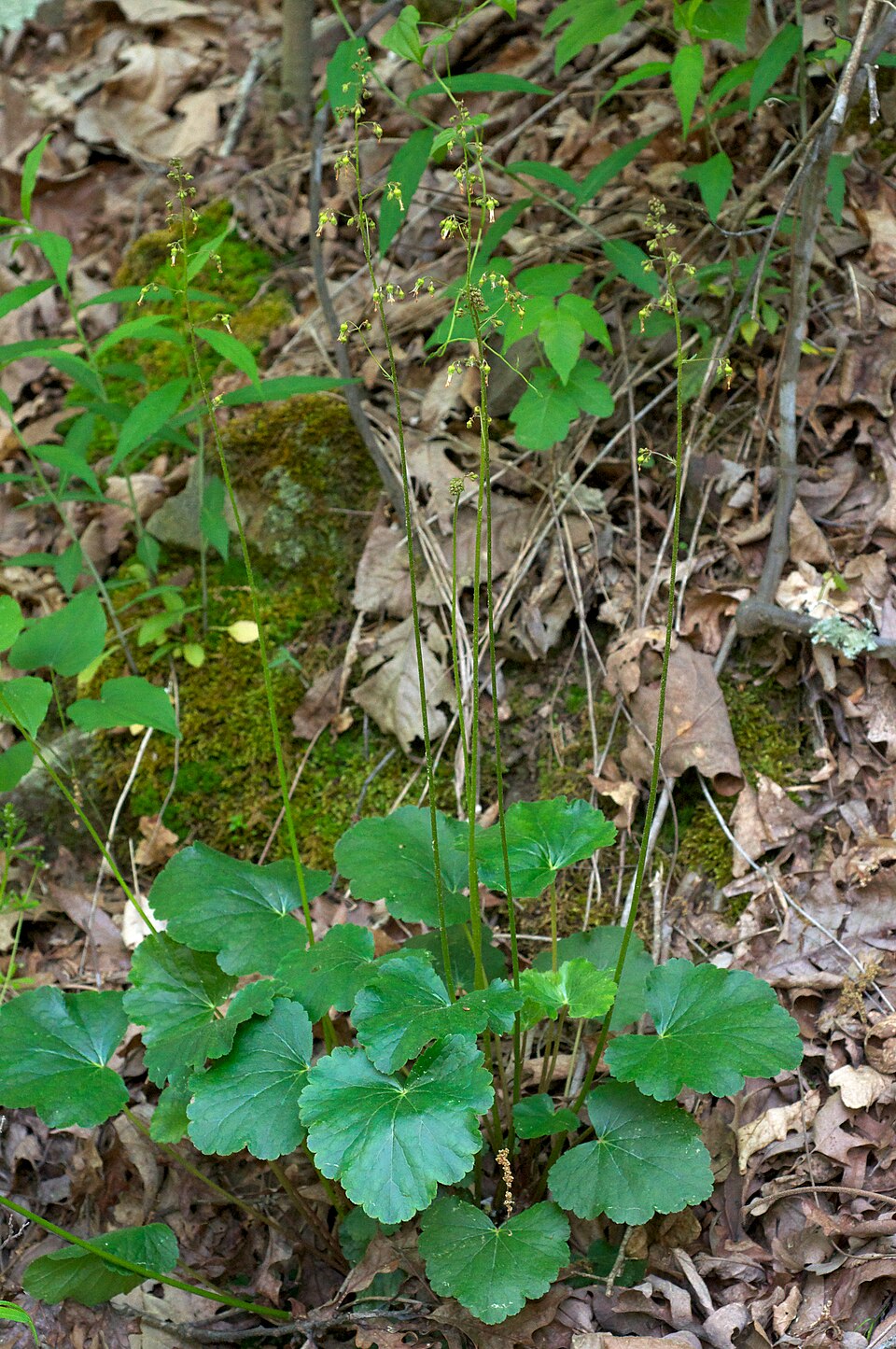

Photo: Wikimedia Commons
Coral bells are grown for leaves, not flowers — ruffled mounds of foliage in purple, caramel, lime, and near-black that light up the shady corners where little else shows color. The airy wands of tiny bell flowers are a bonus, but the foliage is the show, and it holds its color from spring through winter in mild regions. Native to American woodlands, coral bells ask for exactly what a woodland offers: dappled shade, rich soil, and steady moisture. Learning how to grow coral bells comes down to one make-or-break rule: plant the crown at soil level, never buried. The USDA PLANTS entry for Heuchera americana confirms its native shade-garden roots. This guide covers planting, watering, dividing, and keeping the colors vivid. For a quick botanical overview, see the USDA PLANTS entry for Heuchera americana.
Choosing a Variety
Modern coral bells are mostly hybrids of the American native, bred for ever-wilder leaf color. For deep purple foliage, look for types like Palace Purple and Obsidian; for caramel and amber tones, Caramel and Peach Flambe glow in shade; lime-green Lime Rickey brightens dark corners. Newer introductions hold their color better through summer heat, which matters in the South. Buy nursery plants rather than seed if you want a specific color — seedlings vary. The Old Farmer’s Almanac guide to coral bells and the Missouri Botanical Garden plant finder both note that flower color is secondary; choose for foliage. Space plants twelve to eighteen inches apart, since the mounds fill in to make a lush edging along paths and foundations.
When and How to Plant
Timing your sowing
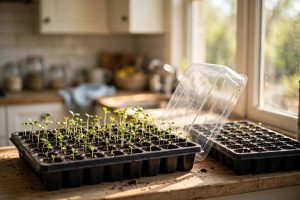
Start coral bells indoors about 8 weeks before your last spring frost. Use small pots or cell packs and keep them warm and bright; coral bells resent having their roots disturbed, so pot up promptly if seedlings outgrow their cells. Move them into the garden about a week after your last spring frost, when nights have steadied. Seeds are tiny, so cover them only about 0 inch deep and keep the mix evenly moist until they sprout.
Spacing, depth, and days to harvest
The first season is mostly about roots and establishment; the real payoff begins in the second season, so plant with patience.
If you start seeds indoors, harden the seedlings off for a week before transplanting — a few hours of outdoor shade the first day, building to full sun. Skipping this step shocks tender plants and sets them back two weeks.
Frost-date charts from a ZIP-code planting calendar help if you are new to reading your zone.
Soil and Sun
Light needs
It prefers part shade — morning sun with afternoon shade is the classic recipe, especially where summers run hot.
Building good soil
The soil recipe is simple: rich, well-drained soil. A generous digging-in of compost at planting time fixes most imperfect soils.
It is rated for zones 3 to 9. Outside that range, treat it as an annual or grow it in containers you can move with the seasons.
Mulch after planting with two to three inches of straw, shredded leaves, or bark. Mulch holds moisture, smothers weeds, and feeds the soil as it breaks down — it is the single easiest upgrade to any planting.
Soil testing labs listed through the University of Minnesota Extension can confirm your pH before you plant.
Watering and Feeding
Watering routine
Keep the soil evenly moist but not soggy. An inch of water a week, from rain or the hose, is the usual target.
Feeding
A spring top-dress of compost is all the feeding coral bells need; heavy fertilizer burns their foliage. It is not a heavy feeder. Rich soil plus compost is enough — save the strong fertilizer for the hungriest vegetables.
Water in the morning so foliage dries by evening — wet leaves overnight invite disease. A rain gauge, or even a tuna can set out in the rain, tells you how much fell; adjust the hose accordingly.
Irrigation basics from Clemson’s Home & Garden Information Center apply to all of these schedules.
Care Through the Season
Through the season, water regularly — coral bells wilt fast in dry soil but rot in soggy ground, so aim for steady, even moisture. Mulch with shredded bark to keep roots cool, and every spring press back any crowns that freeze-thaw cycles have heaved upward; exposed crowns dry out and die. Divide every three to four years: lift the clump, split the crown, and replant the outer pieces at soil level, discarding the woody center. In spring, pull off tattered older leaves to let the fresh growth shine. Watch for vine weevils, whose grubs chew roots while adults notch leaf edges; beneficial nematodes watered into the soil control them. The Lady Bird Johnson Wildflower Center notes coral bells’ value for native shade plantings, and their cultural notes match: rich soil, good drainage, no wet feet.
Companions and Placement
Coral Bells earns its place in a mixed perennial border with Astilbe, Columbine, and Daylily, where contrasting forms — spires against mounds, fine foliage against bold — create the real drama. Plant in generous drifts rather than ones and twos, and think about what the bed looks like in winter too; seed heads and evergreen foliage carry the off-season. Keep aggressive spreaders in check with yearly edging, and divide congested clumps before bloom suffers. A border is a slow painting; expect to move plants around for the first few years.
Harvest
Coral bells are not harvested like vegetables, but they do give cut material: snip the airy flower wands for small, delicate bouquets, or deadhead them to keep the focus on the foliage — the Missouri Botanical Garden plant finder suggests removing spent wands for the tidiest look. Individual leaves last surprisingly well in small arrangements, and the evergreen foliage can be tucked into winter containers for color when everything else is brown. The real ‘harvest’ is division: every few years your clumps give you free plants to spread along the border or share with neighbors. Lift, split, replant at soil level, water in — that is the whole technique.
Troubleshooting
A plant that rots at the base was planted too deep — the single most common killer. Lift it, reset the crown exactly at soil level, and improve drainage. Scorched, crispy leaf edges mean too much sun or too little water; move the plant or increase shade and mulch. Heaved crowns after winter are normal in freeze-thaw climates; press them back each spring and mulch after the ground freezes to reduce the cycling. Notched leaf edges point to vine weevils — check at night with a flashlight and treat soil with nematodes. The USDA National Agricultural Library indexes extension bulletins on Heuchera culture for stubborn cases. If a plant’s center goes woody and bare while the edges thrive, it is begging to be divided; do it in spring and both halves will rebound.
Through the Seasons
Spring
Spring is cleanup and renewal: cut back dead foliage, divide congested clumps, and set out new plants. Stake tall growers early, before the rush of growth makes it awkward. Top-dress with compost and refresh mulch. Watch for slugs on young shoots — spring is their season too.
Summer
Summer is the payoff: deadhead spent blooms to stretch the show, water through dry spells, and cut flowers for the house in the morning. Watch for the pests noted above, and stake any stems the wind threatens. A mid-season trim of leggy plants brings fresh growth and sometimes a second flush.
Fall and Winter
In fall, leave some seed heads standing for birds and winter interest, then cut the rest back after hard frost. Mulch crowns in cold regions once the ground freezes. This is the time to move or divide anything in the wrong spot — the garden forgives fall transplants.
Quick Answers
How long until I can harvest coral bells?
The first season is about establishment; expect the real harvest to begin in the second season. Perennials reward patience.
Where will coral bells grow?
Zones 3 through 9. Inside that range it is hardy and reliable; outside it, grow as an annual or in containers.
Does coral bells need full sun?
Part shade. A little afternoon shade is welcome where summers run hot.
What spacing does coral bells need?
About 14 inches apart. Crowding stunts plants and invites disease, so give each one its room — the harvest is bigger, not smaller, for the space.
Garden Design Ideas
Coral bells earn their keep as edging along shady paths, where the colored mounds read like a ribbon even when nothing is blooming. In containers they are the thriller-and-filler that lasts all season — pair purple leaves with chartreuse companions for contrast that glows in shade. Underplant them beneath deciduous shrubs, where spring sun reaches them before the canopy closes. Their evergreen foliage carries winter containers when annuals are long gone. Repeat one color in drifts rather than dotting singles about; five mounds of the same caramel read as design, while five different colors read as a sale table. Browse more plant profiles at Gardenia.net’s plant profiles for ideas.
Keep Growing
How to grow coral bells, in short: crown at soil level, shade from hot sun, steady water, divide every few years. Do that and the mounds of colored foliage will carry your shade garden nearly year-round. For exact planting dates, check your USDA zone planting dates and combine coral bells with other shade lovers — our guides to how to grow astilbe, how to grow columbine, and how to grow daylilies make natural companions.
References
- Missouri Botanical Garden. (n.d.). Coral Bells. https://www.missouribotanicalgarden.org/
- Old Farmer’s Almanac. (n.d.). Growing coral bells in home gardens. https://www.almanac.com/
- U.S. Department of Agriculture. (n.d.). Coral Bells (Heuchera americana) plant profile. https://plants.usda.gov/home
- Lady Bird Johnson Wildflower Center. (n.d.). Coral Bells. https://www.wildflower.org/plants/
Was this guide helpful?

About My Garden US
The My Garden US editorial team writes practical, in-depth home and garden guides for American homeowners — tested advice, no fluff.